Insights no 25
Welcome To Insights Issue 25
Welcome to ArtsNational Insights 25 July 2026. Thanks to everyone for their wonderful feedback on our previous edition. Please keep the feedback and ideas for stories coming, including anything you’d like to see in future issues of Insights. We want to hear from our members and share your stories with other ArtsNational members and guests across the country.
In this issue of Insights, you’ll find a fun and innovative fundraising idea from ArtsNational Newcastle, read about the annual Young Arts photographic competition run by ArtsNational Hobart, learn about a special ArtsNational treasure, find presenters to watch for in coming months, enjoy a member story from Hobart, learn why people collect art in a fabulous article from our Patron, and learn about some of the incredible conservation projects being supported across the country through the ArtsNational Philanthropic Fund.
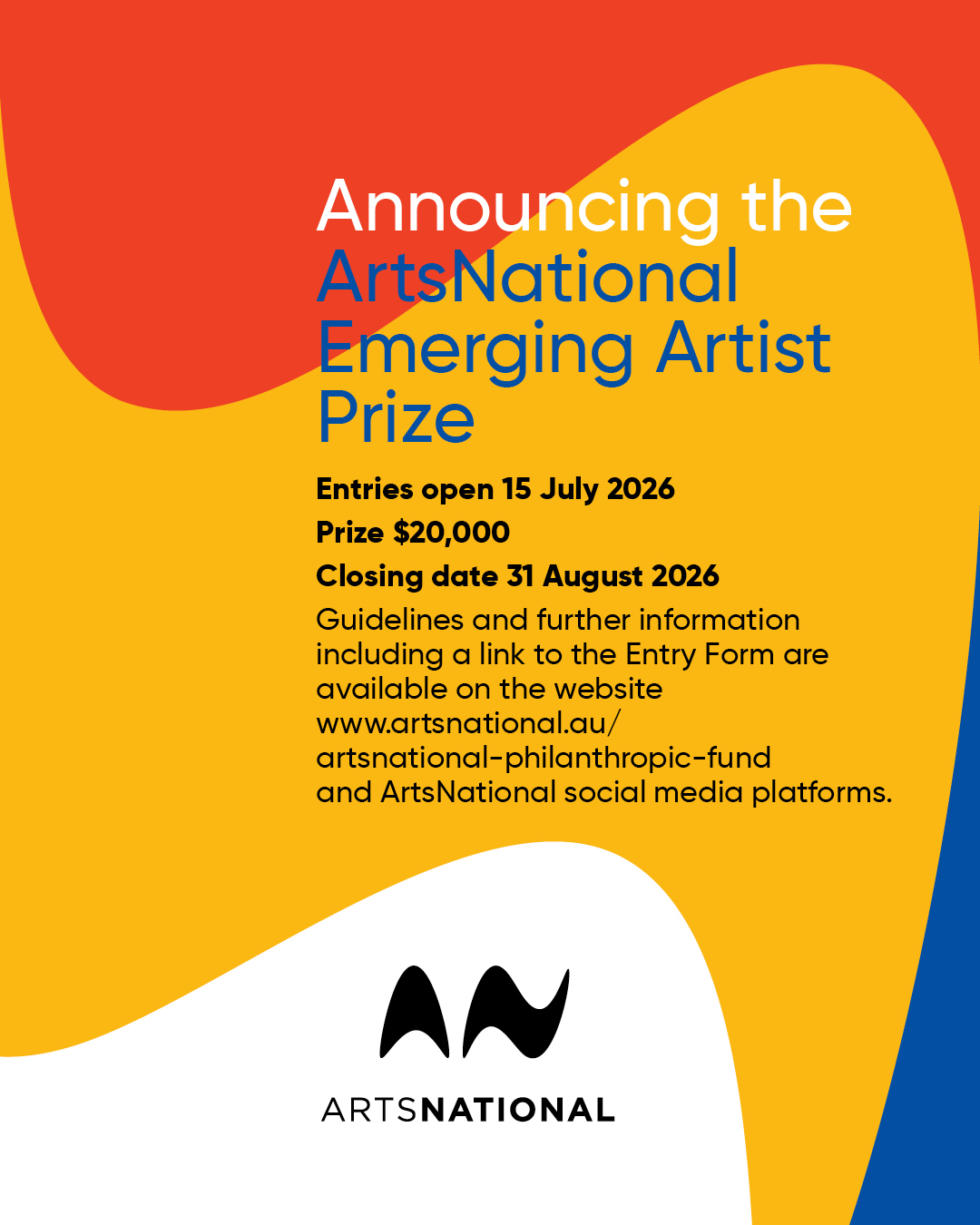
We’re also excited to announce the inaugural ArtsNational Emerging Artist Prize, which is now open for entries, so please share the links for this very special award with your members and aspiring artists.
Please send me any feedback and ideas for articles you’d like included in future Insights issues. I look forward to hearing from you.
Cheers
Bevan Rigato, General Manager and Insights Editor
E: Insights@artsnational.au
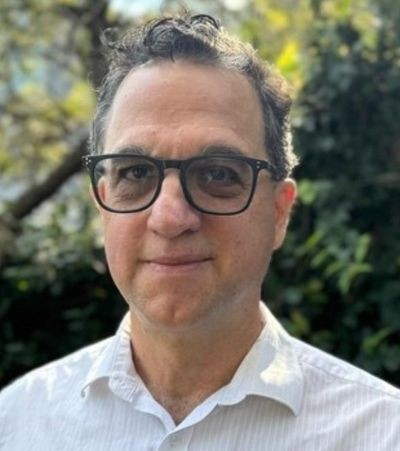
FROM THE CHAIR
ArtsNational holds an annual in-person meeting in Sydney each March. The meeting is attended by the Chairs of our 36 societies across Australia, along with members of the committees that support the running of the organisation.
This year, our Patron, Julian Bickersteth AO, delivered the keynote address, and I would like to share some of his insights.
Julian began by referring to the book Your Brain on Art*, which explores the emerging field of NeuroArts. NeuroArts examines how the arts and aesthetic experiences can measurably affect the body, brain, and behaviour. It investigates how engaging with music, dance, visual arts, literature and other art forms can influence both our physiological and psychological well-being. Scientific studies have shown that participation in the arts can enhance brain development, improve mental and physical health, and provide physical health benefits such as lowering blood pressure and supporting immune function.
ArtsNational aims to bring people together through stimulating lectures presented in a congenial atmosphere. How wonderful to know that this engagement is also good for our health.
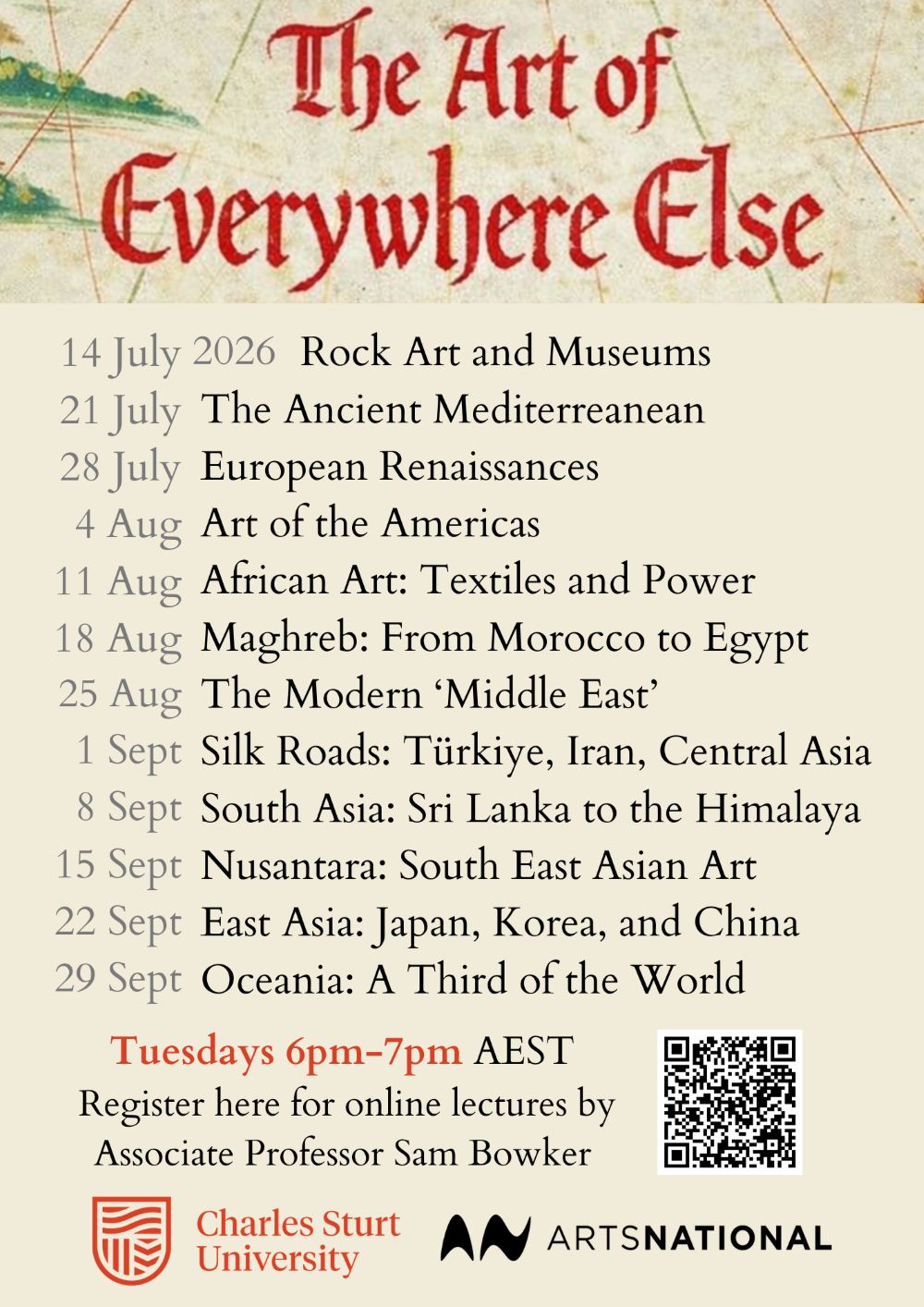
As winter settles in and the temptation to stay at home grows, you can still enjoy these health benefits from the comfort of your armchair by signing up for Professor Sam Bowker’s free lecture series, The Art of Everywhere Else. Although these lectures have been offered before, they are well worth revisiting and this offer provides an excellent opportunity to catch up on any sessions you may have missed. The series began on 14 July, but there are still plenty of lectures to come.
Scroll to the end of this issue of Insights where you can see the current schedule and click on the image to visit the online registration page.
*New York Times Bestseller Your Brain on Art by Susan Magsamen and Ivy Ross
Sally Louw, Chair ArtsNational
E: chair@artsnational.au
ARTSNATIONAL NEEDS YOU
We are looking for someone to join the ArtsNational Lecturers Committee as the Cook Circuit Coordinator. The position involves working with a team of dedicated volunteers to select our international lectures along with their lecture topics and preparing their travel itinerary for their lecture tour. If you have reasonable computer skills, some free time and love being a part of a close-knit team, please contact Sarah McCosker, Chair of the National Lectures Committee.
Sarah McCosker
Chair Lecturers Committee
E: chairlc@artsnational.au
DUET FUN THERAPY
On the 5th of June an idea to raise funds for the ArtsNational Newcastle Young Arts programme came to a happy and successful Piano Duet performance called Duet Fun Therapy. Keeping old hands busy helping Young Artists. As an Octogenarian I wanted to continue to play the piano even though my hands are arthritic and painful. I asked a retired anaesthetist friend who also plays piano to join me and we have played each week since my husband died.
With lots of laughs and serious counting, we managed to bring together a programme of accessible music and then took courage to raise some funds for Young Arts in a public performance. We had no overheads as we performed in my piano partner’s home and opened the doors to 30 friends. We filled the seats easily and simply asked for a donation. We provided a tasty afternoon tea and had a kind neighbour look after that aspect for us. Judy’s husband turned our pages. A real team effort.
DUET FUN THERAPY 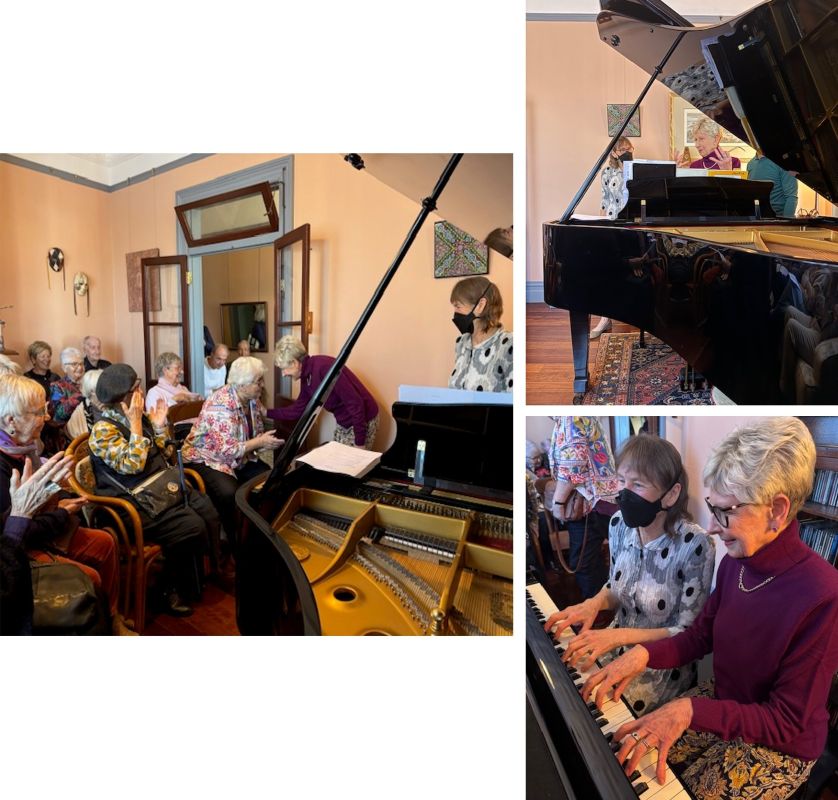
Programme Peter Sculthorpe (1929-2014) FOUR LITTLE PIECES for piano duet 1 Morning Song II Sea Chant III Little Serenade IV Left Bank Waltz
Franz Schubert (1797-1828) Music from the ballet “Rosamunde” arranged for piano four hands
Franz Lehar (1870-1948) The Gold and Silver Waltz arranged for piano four hands
Edvard Grieg (1843-1907) Selections from Peer Gynt Suite No. 1 Opus 46 and Suite No. 2 Opus 55 arranged for piano four hands by Edvard Grieg 1 Morning Mood 2 Solvejg’s Song 3 Ase’s Death 4 Anitra’s Dance 5 In The Hall of the Mountain King
Arthur Sullivan (1842-1900) Selections from the Opera MIKADO, A Potpourri for four hands Arranged by C Blake
Ross Edwards (1943 – ) A FLIGHT OF SUNBIRDS Nine bagatelles for piano duet (2001)
Thanks to the generosity of our 34 guests we raised $1330 for the ArtsNational Newcastle Young Arts Programme and had such fun along the way. I highly recommend to all to keep playing, singing, painting, sculpting, sewing, knitting with friends – it really is good for our wellbeing. Judy and I are testament to that.
Janey Smith ArtsNational Newcastle member (former National chair)
ARTSNATIONAL HOBART: 2026 YOUNG ARTS PHOTOGRAPHIC COMPETITION
In the first days of the COVID-19 pandemic ArtsNational Hobart attempted to find a way to engage with young artists in a way that might allow them to send us images online. Our Vice-Chair at that time, Jen Holmes, suggested an online photographic competition. As a result, since 2020 ArtsNational Hobart has run a young artists (ages 16-24) photographic competition and for each year there is a different theme to which the artists can respond.
We offer significant prizes and the development of professional skills for the entrants and prize winners. By doing this, we are supporting young artists and those developing their reputations in contemporary art practice.
We send out emails with all the information and a link where artists can upload their image to our website. Emails are sent to the University’s School of Art, Senior Secondary colleges and regional art organisations in southern Tasmania. Posters are designed in-house, then copied in the office of our federal MP, Andrew Wilkie. They are strategically placed in cafes, libraries, art supply shops, sent to senior secondary Art teachers and pinned up at the University’s Art School in April. Timing is important, so that we allow nearly six months for the entrants to develop their ideas and upload their images prior to the closing date in September. We are fortunate to have, as our judges, two highly regarded professional photographers / videographers – Alice Gray and Matt Scott, who provide a constructive and supportive critique that nurtures these efforts: this creates a positive learning opportunity for all entrants. The theme for 2026 is Past – Present – Future gives entrants much scope for creativity.
Initially, the judges choose ten images as their top finalists and these are uploaded to the ArtsNational Hobart website. While the judges choose four entrants for the main prizes [First Prize ($1500) and three Honourable Mentions ($750)], the ArtsNational Members then vote for an image for the Members’ Choice Prize ($1000). The five prize winners are invited to our penultimate lecture of the year and are awarded their prizes to the acclaim of our large audience. In 2025, the Hobart Photographic Society also generously supported the competition in a way that has enabled the artists to participate in a practical workshop with one of the judges in a professional photographic studio.
To extend the competition further into the community, after its completion the Young Arts committee choose 5 images to make into cards, printed professionally, packaged as a set, and then given as thank-you gifts for our lecturers, volunteers and Friends of the Committee. They have also proved to offer some modest publicity for ArtsNational Hobart. Each young artist whose image was chosen receives a full set of images as well as five copies of their own photograph.
This competition not only offers five monetary prizes to the winners, every entrant gains knowledge and advice. This process also connects us to our local MP, the Hobart Photographic Society and all senior-secondary and tertiary institutions in southern Tasmania as well as arts organisations. What began as a COVID-19 activity has developed into a successful youth arts programme and the feedback from artists and institutions has been universally positive.
Deb Simmons
John Williamson
Young Arts Committee ArtsNational Hobart
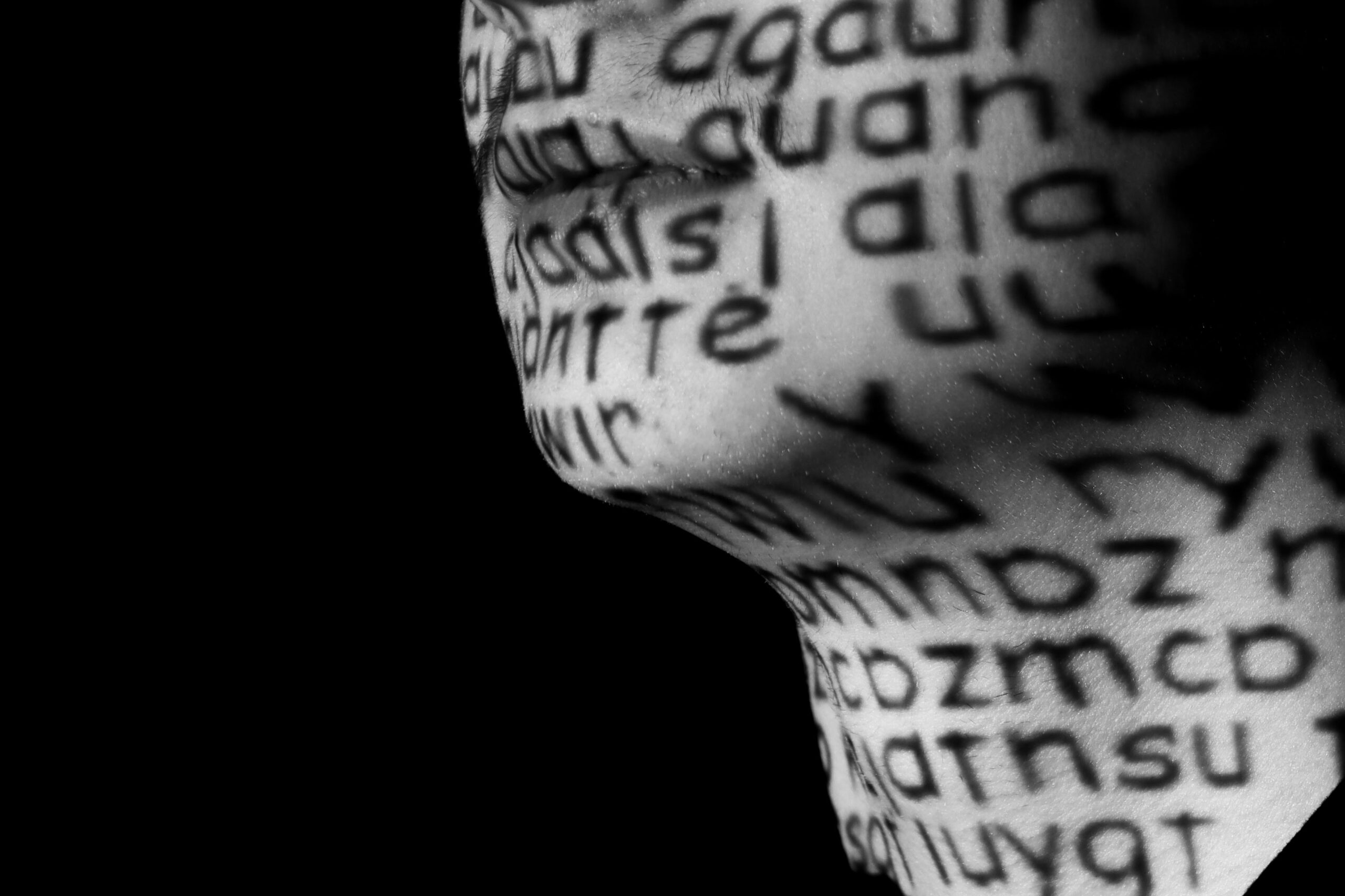
Freya Boundey, Lost in Translation, 2025 Honourable Mention
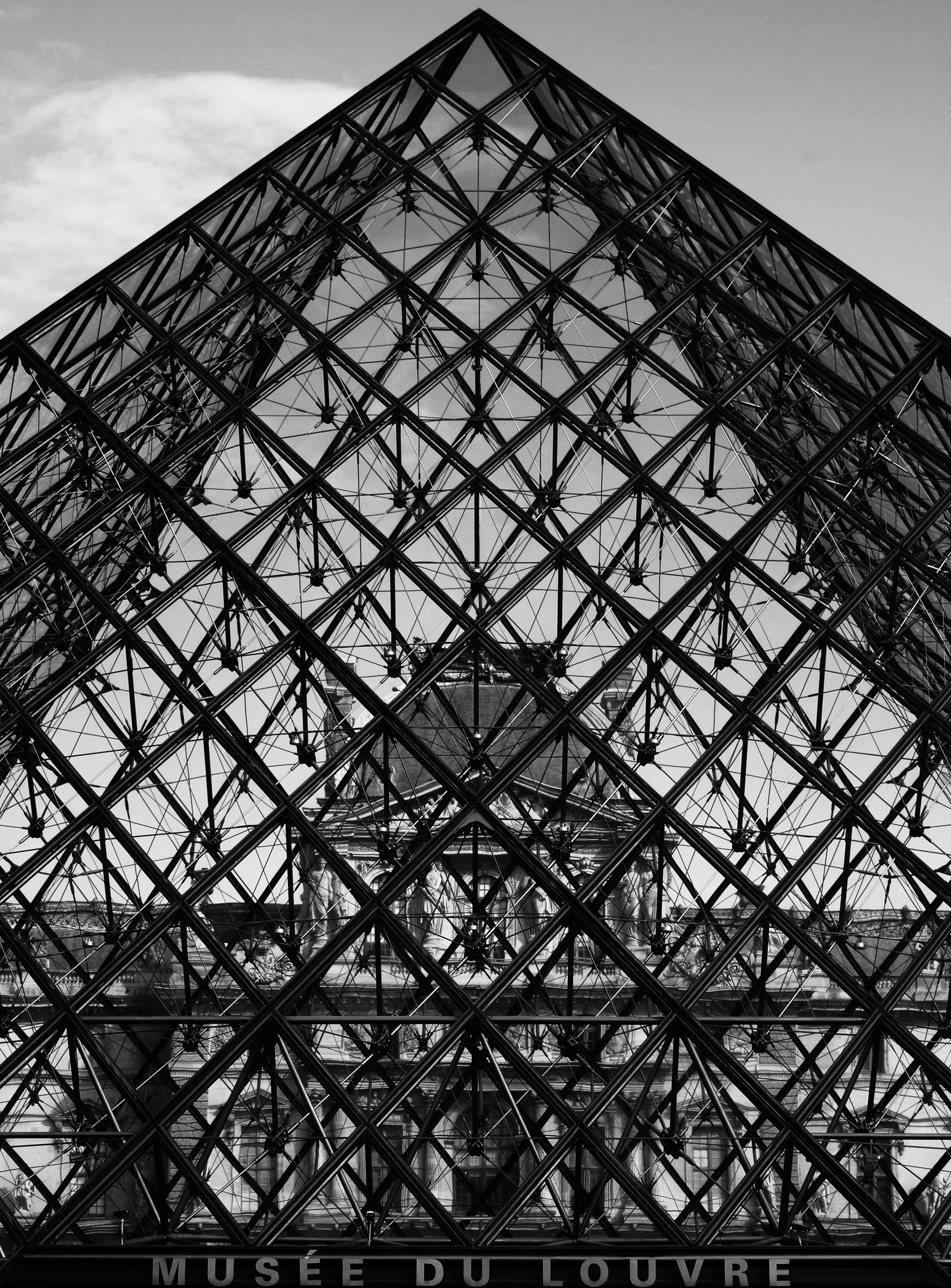
George Burnett, Louvre pattern, 2025 Honourable Mention
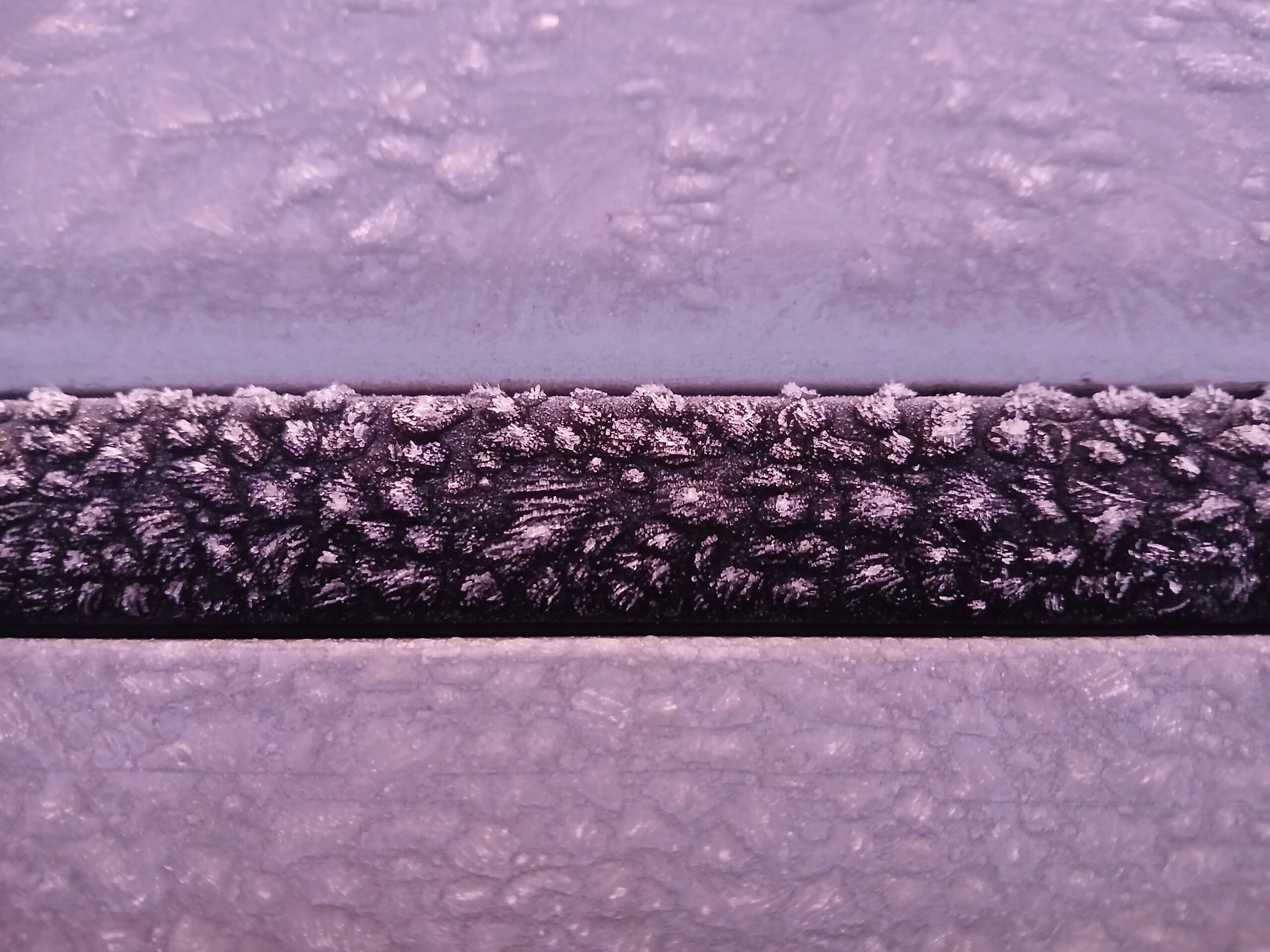
Lucinda Verne, Frozen Sunrise, 2025 Honourable Mention
SMALL TREASURES
I was fortunate to be present on Friday 13th March 2008 at the 20th AGM of the Association of ADFAS (now ArtsNational) when Kate Siebert, NADFAS Overseas Area Representative, addressed the meeting and presented a gift from NADFAS to AADFAS on the occasion of the 20th Anniversary of the Association. Kate said, “it comes with much affection and esteem that ADFAS is regarded in the UK.”
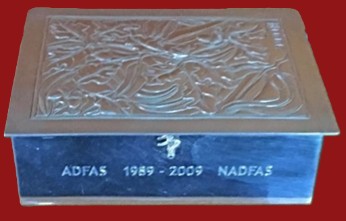
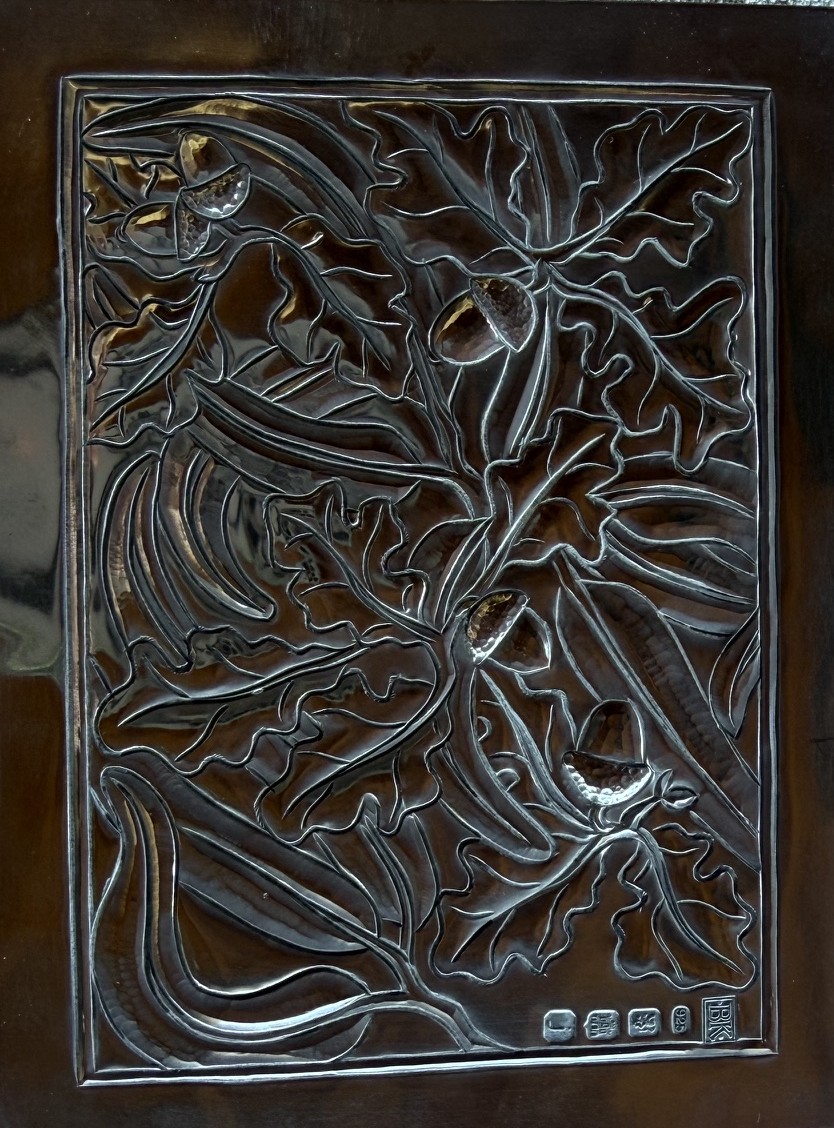
The gift, a silver box, had been commissioned by NADFAS from Bryony Knox, MA, Glasgow School of Art 1999, and first recipient of a NADFAS grant from the South Mercia Area in 2006. Bryony has since become very well known, especially for her boxes with secrets; to see more of her work click here.
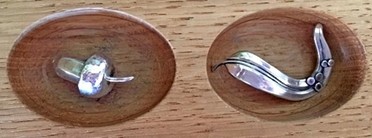
Bryony’s design incorporates an element of surprise as hidden inside, in a nest of English oak, are a silver acorn and a eucalyptus leaf with gumnuts, to symbolise England and Australia. The seeds from these trees also represent the seeds of friendship, sharing of ideas, and are a symbol of our ongoing relationship.
The decoration of oak leaves, acorns and eucalyptus leaves on the lid was achieved by using the techniques of repousse and chasing. The acorns act as highlights and give a three-dimensional effect to the lid. The box has an Edinburgh hallmark and is engraved on the front “ADFAS 1989-2009 NADFAS”.
Then Chairman Charlotte Nattey received the gift on behalf of the Association, and thanked NADFAS for their very kind thoughts and gesture. The box was left on display for members to admire. Since then, the box is usually displayed at all Council Meetings.
The Minutes of the AGM held on Friday March 30, 2012 tell us that “The outgoing Chairman, Trish Roche Greville, handed to the incoming Chairman, Pam Nielson, the silver box given to ADFAS by NADFAS on the occasion of the Association’s 20th anniversary, the silver brooch given to ADFAS by NADFAS on the occasion of the Association’s 10th anniversary and a memory stick holding data relevant to the role of National Chairman”.
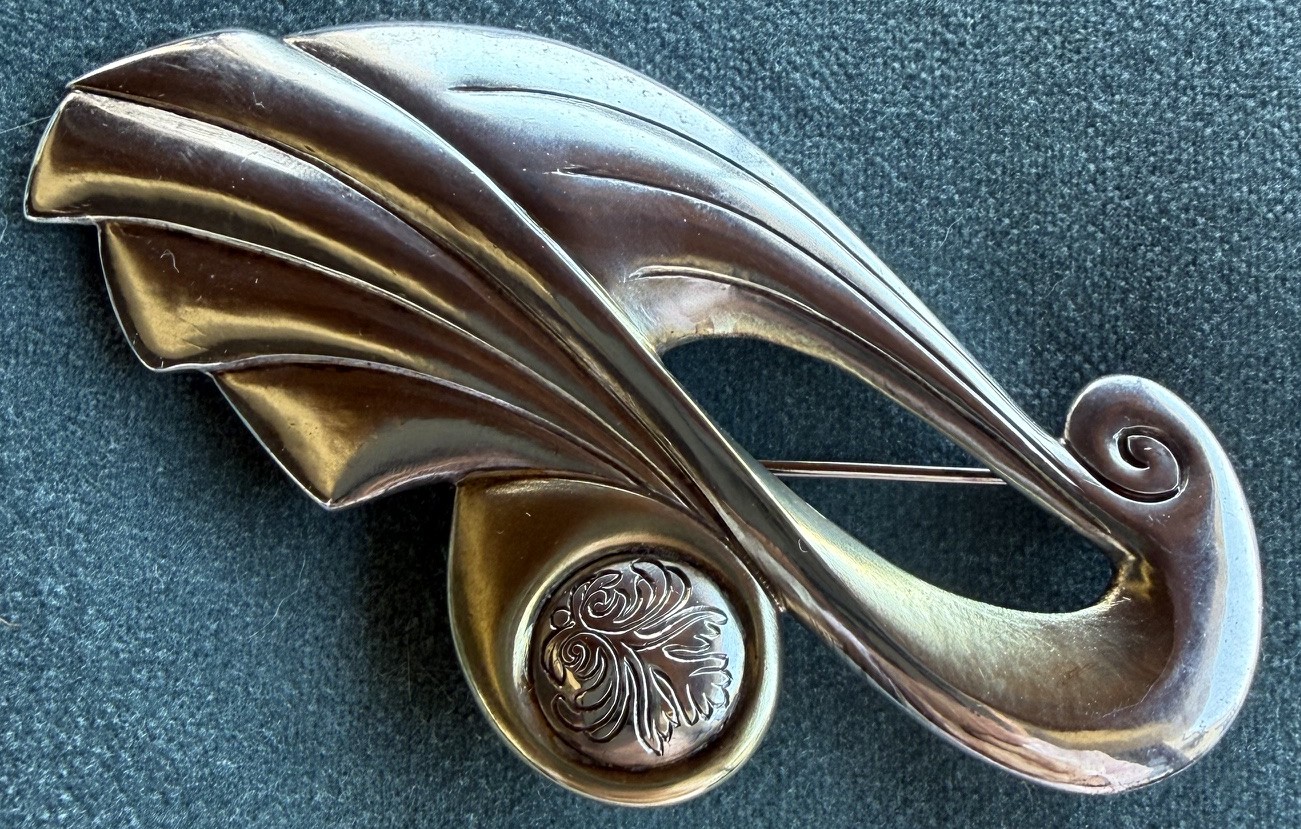
The Sterling Silver and Gilt brooch, engraved “Presented to AADFAS by NADFAS, March 2000” was commissioned by NAFAS (now The Arts Society) and presented to then National Chairman Pamela Peschar by then NADFAS Vice Chairman J Read, on her visit to Australia in 1999. It was designed by renowned London silversmith Shannon O’Neill. To find out more about Shannon’s work click here.
The Minutes of our National AGM in 2008 tell us that National Chairman Neroli Jordan presented the NADFAS brooch to Charlotte Nattey symbolising the changeover in Chairmen.
The silver box and broach have been presented to every succeeding National Chair and have stayed in their care during their term of office.
Written By Terry Cronin
Chair ArtsNational Brisbane River, Former National Treasurer
PRESENTERS TO WATCH FOR IN COMING MONTHS
Our members and guests will very much enjoy the beautifully illustrated lectures and interest days on offer over the next few months. If you are travelling in Australia, do check our What’s On for ArtsNational webpage to locate a lecture near you. Click here if you’d like to do a search by state. These pages will show you the extensive range of lectures on offer across the country. Click on your lecture of interest to find out more details about both the talk and the presenter.
August 2026
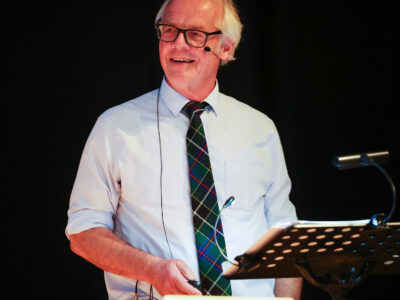
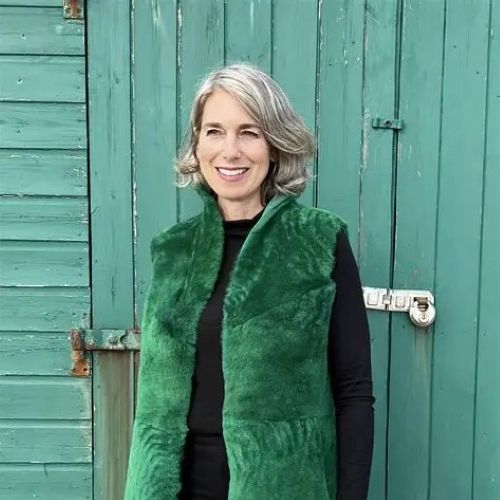
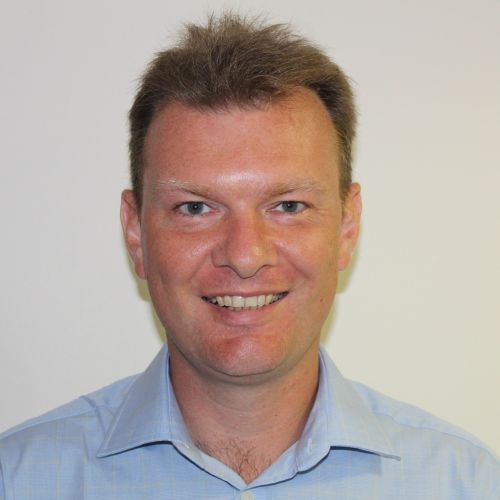
Our members and guests can enjoy beautifully illustrated presentations by Mark Cottle who is visiting societies mainly in NSW where he will speak on Medieval and Tudor topics, including Medieval Cathedrals, the Tudor Court and all things Gloriana. Meanwhile, our societies from Cairns, through Sydney, Canberra, South Australia and Western Australia will learn the stories of invisible women of the 19th and 20th century from Tessa Boase, a freelance journalist, author and campaigner who will delve into the lives of these women who worked in English country homes, how women shopped and Women’s Fight for Change. For members in Victoria, Tasmania and Queensland James Renshaw, a Classicist and author of textbooks will uncover the stories of Alexandria, Pergamon, Pompeii and Herculaneum amongst many others as he visits the societies on his ArtsNational tour.
Interest Days to note, an opportunity to delve deeper into a subject:
- A Social History of the High Street, Tessa Boase, 10am 6 August 2026, ArtsNational Ku-ring-gai
- Icons of Greek Art & Architecture, James Renshaw, 10am 13 August 2026, ADFAS Brisbane
- The Housekeepers Tale: The Women who really ran the English Country House; 10.30am 16 August 2026, ArtsNational Murray River
September 2026
Professor Marie Conte-Helm OBE will tour our New South Wales societies with a fascinating offering of lectures on the arts and culture of Japan, Chinese Landscape Painting and more. Concurrently, Mariska Beekenkamp-Wladimiroff, an art historian specialising in Dutch Baroque arts of the 17th century, will be touring the ArtsNational Flinders circuit societies sharing her knowledge on subjects as diverse as Jan Van Eyck, Hieronymus Bosch and Mondrian. A complete contrast is available via Clare Blatherwick’s presentations to societies on the ArtsNational Cook circuit as Clare is a Scottish independent jewellery consultant and jewellery historian who will delve into the Naturalism of Fabergé, the World of Pearls and The Story of the Cullinan Diamond Mine, to mention a few topics.
Interest Days to note, an opportunity to delve deeper into a subject:
- Symbolism in Art: Discover the Hidden Meaning; Mariska Beekenkamp-Wladimiroff, 10am 3 September 2026, ArtsNational Ku-ring-gai
- Nature, Art and Gardens in Japan: From Tradition to Contemporary Life; Professor Marie Conte-Helm, 9.45am 25 September 2026, ArtsNational Sydney
Written By Sarah McCosker
Chair Lecturers Committee
Mark Cottle
Tessa Boase
James Renshaw
FROM TASMANIA TO THE MET
While most are familiar with the Met Gala as the glittering annual event held to raise funds for the running of the Costume Institute at the Metropolitan Museum of Art in New York, little did I imagine that I would come to be intimately involved with its latest exhibition Costume Art which opened on May 4th this year in the brand new gallery space at the Met!
It all began with an invitation from the chief curator of the Costume Institute, Andrew Bolton, who became aware of my work on fashion as an embodied artform through writings of mine, published in academic journals and collected anthologies during the course of my professional life as Head of Art and Design Theory at the School of Art, University of Tasmania. The pivotal role that these writings came to play in his conceptualisation and curation of the exhibition Costume Art, led him to invite me to write an essay for the catalogue accompanying this exhibition, as well as to provide feedback on his curation.
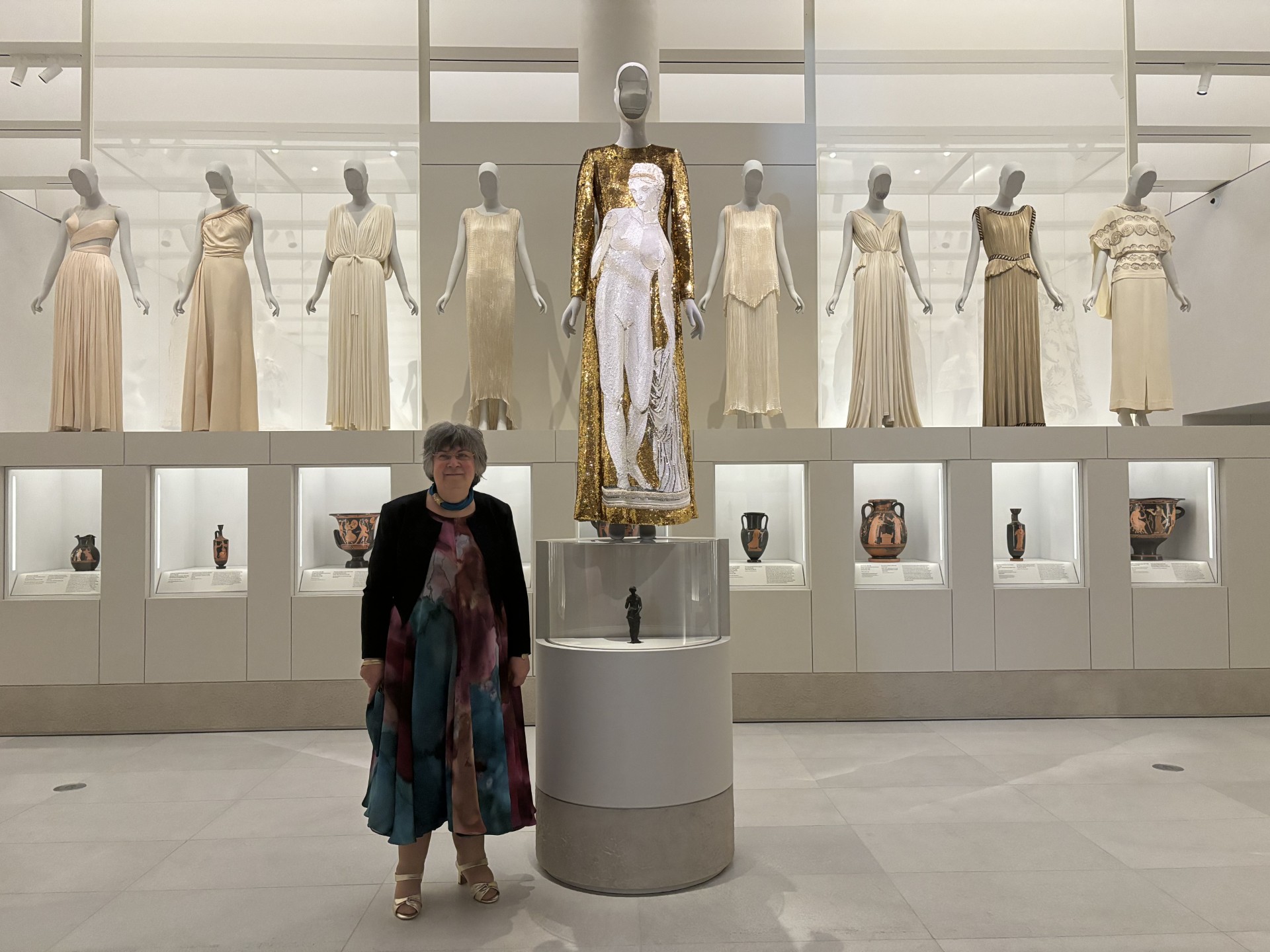
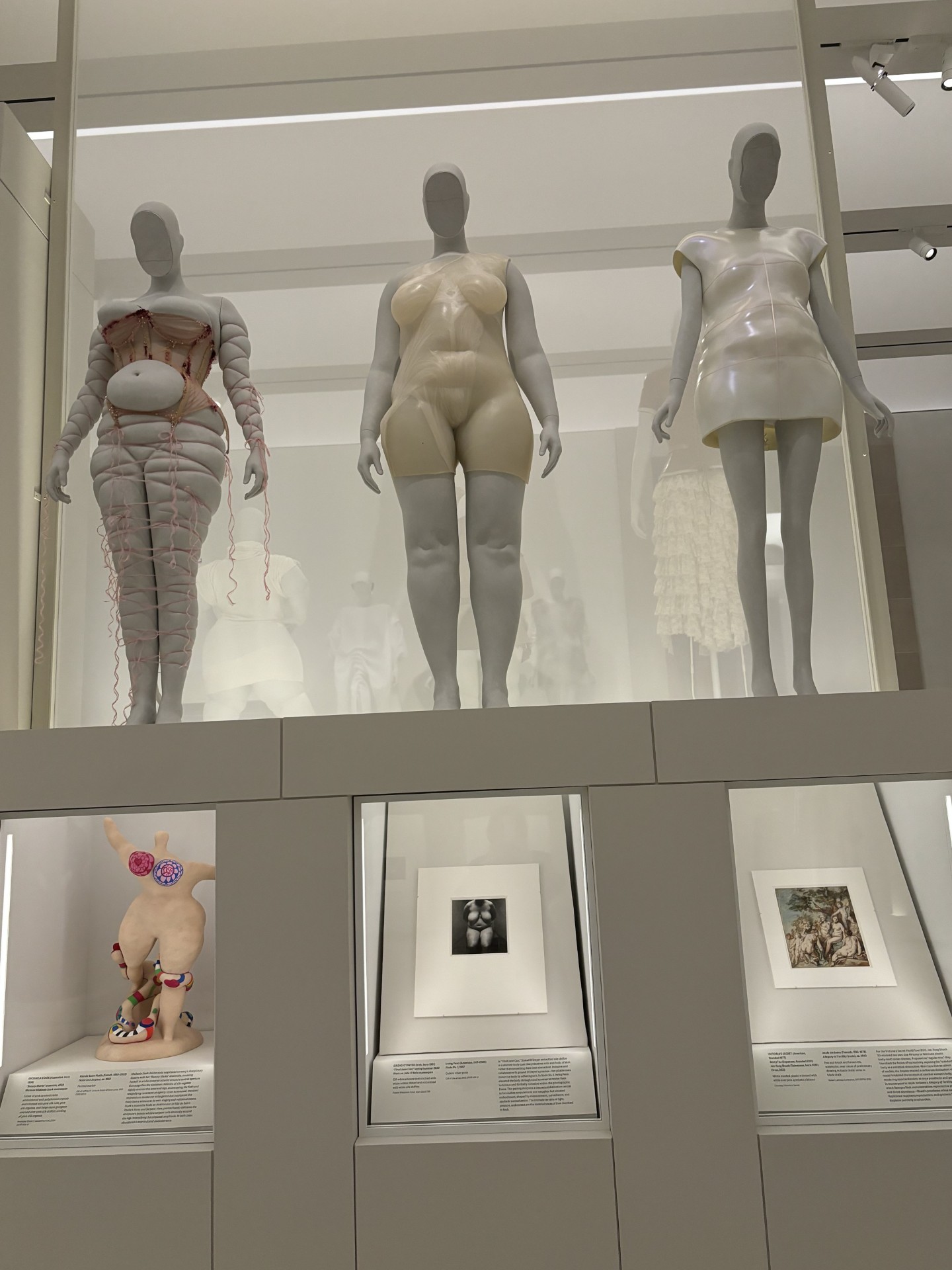
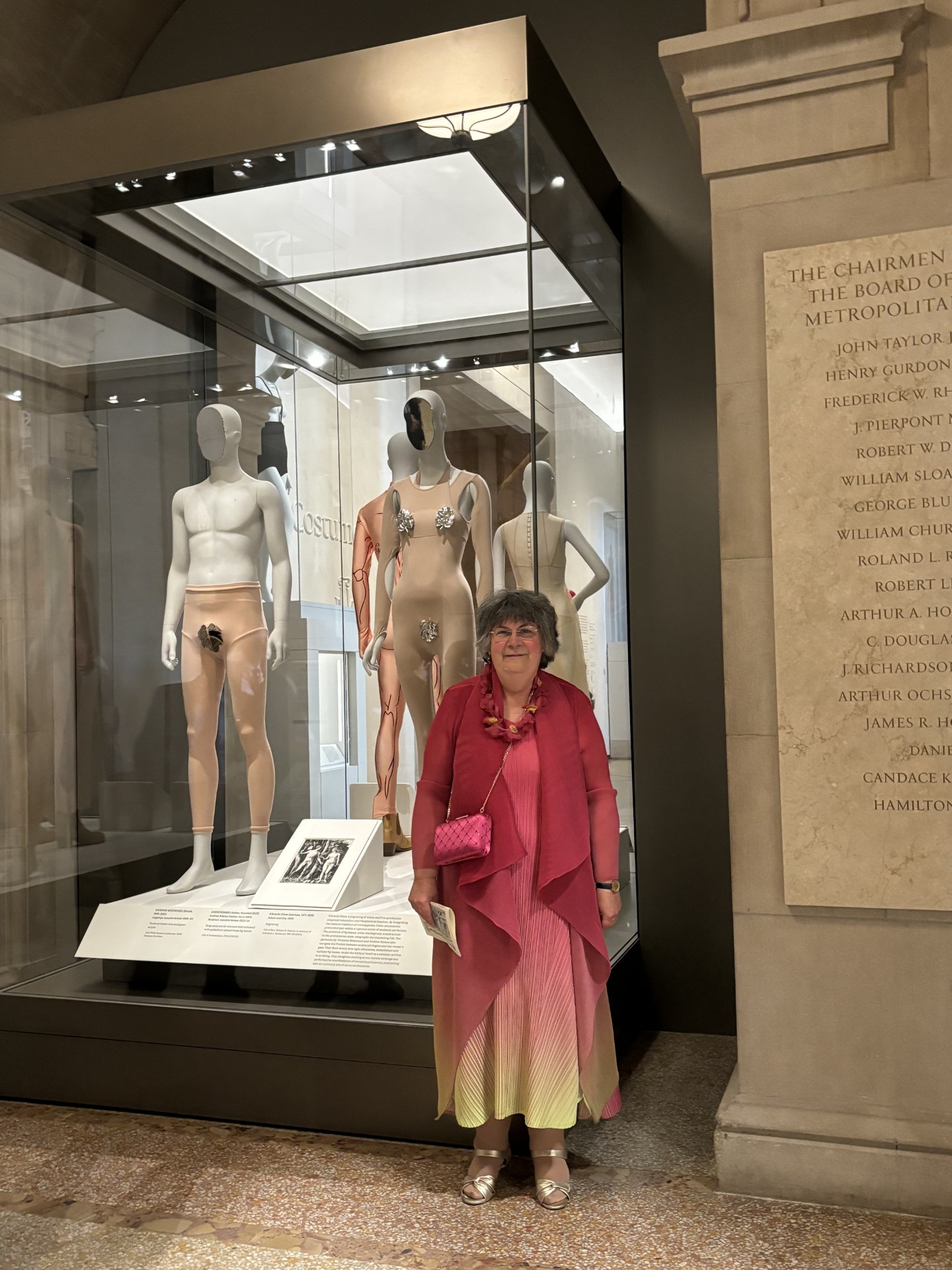
The process of working over the past few months on this project, whose scope and ambition is beyond anything I have ever experienced, has been an inspiring one! The exhibition comprises two hundred fashion garments paired with two hundred artworks sourced from across all of the departments at the Metropolitan Museum of Art, illustrating the integral relationship between clothing and the body. In order to counter the reduction of fashion to a purely visual form, which tends to occur when it is juxtaposed with art, here the corporeal nature of fashion is emphasized. This is achieved through the organisation of the exhibition into various body types including the Classical body, the pregnant body, the corpulent body, the disabled body, the inscribed body, the anatomical body, the ageing body and the mortal body. What is unusual about this exhibition are the diversity of body types that are featured, many of which depart from the standardised ideal of beauty prevalent in the fashion industry. In a number of instances, custom-made mannequins based on the bodies of actual people were produced in order to encompass the wide range of body shapes on display.
Another innovative feature is the replacement of the mannequins’ faces with shiny, metal surfaces in which the spectators can see their own reflection, in order to elicit an empathetic connection between the viewer and the dressed mannequins. The prominent display of the clothed mannequins on elevated podiums into which the artworks are embedded, also serves to encourage the audience to view the artworks through the lens of the dressed body rather than the other way around.
In May this year I travelled to New York to attend the opening of the Costume Art exhibition at the Met which was a star-studded event featuring the Director of the Met, Max Hollein, Anna Wintour, Venus Williams and Andrew Bolton. It was wonderful to finally see the exhibition after having viewed the works in reproduction for the preparation of my catalogue essay. I also had the opportunity to attend an event celebrating the opening of the new gallery space housing the exhibition where I met one of the fashion designers/model – Michaela Stark – whose body was used as the basis for some of the mannequins in the exhibition.
I feel very privileged to have been a part of this project and to see how my ideas have influenced a new direction in the way fashion is displayed in such a pre-eminent institution as the Metropolitan Museum of Art in New York. The exhibition runs until January 10th, 2027.
Dr. Llewellyn Negrin
Adjunct senior researcher
School of Creative and Performing Arts
University of Tasmania L.Negrin@utas.edu.au
Photos all care of Dr. Llewellyn Negrin. The mannequin displaying the outfit on the left is based on the body of Michaela Stark who Dr Negrin met at one of the Met functions. The photo without anyone present features examples from the corpulent body section.
WHY DO PEOPLE COLLECT ART?
In May 2026 Jackson Pollock’s Number 7A, 1948 sold for $265m in New York. Jerry Saltz, New York Magazine’s art critic, described the auction as “a carnival-freak show spectacle in evening wear. The grotesque price drew gasps, then the sickening applause began — applause for money itself.” Apart from the fact that Blue Poles, our very own Jackson Pollock at the National Gallery in Canberra, is in my view a far more attractive painting (and being already Australia’s most valuable painting has presumably gone roaring up in value), it set me thinking as to why do people collect art. There seem to be three main reasons, setting aside such issues as supporting living artists, or liking the story behind the artwork. These are:
* For personal enjoyment, whether viewing the artwork evokes memories, brings comfort or just uplifts the soul.
* For social prestige and investment, whether to establish status or cultural sophistication with the added hope the artwork will increase in value.
* For the thrill of collecting, both in the process of acquiring and also in building a collection.
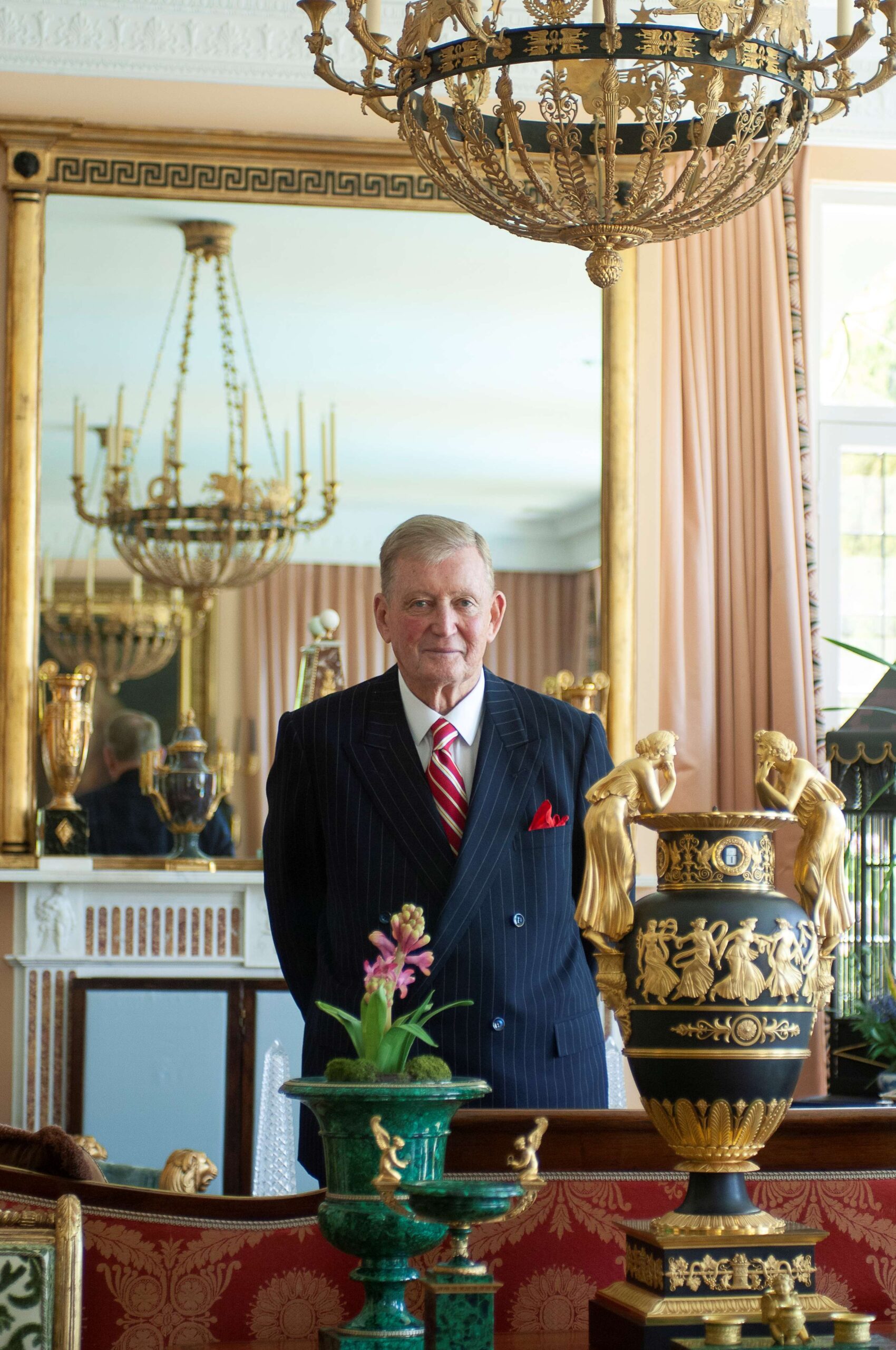
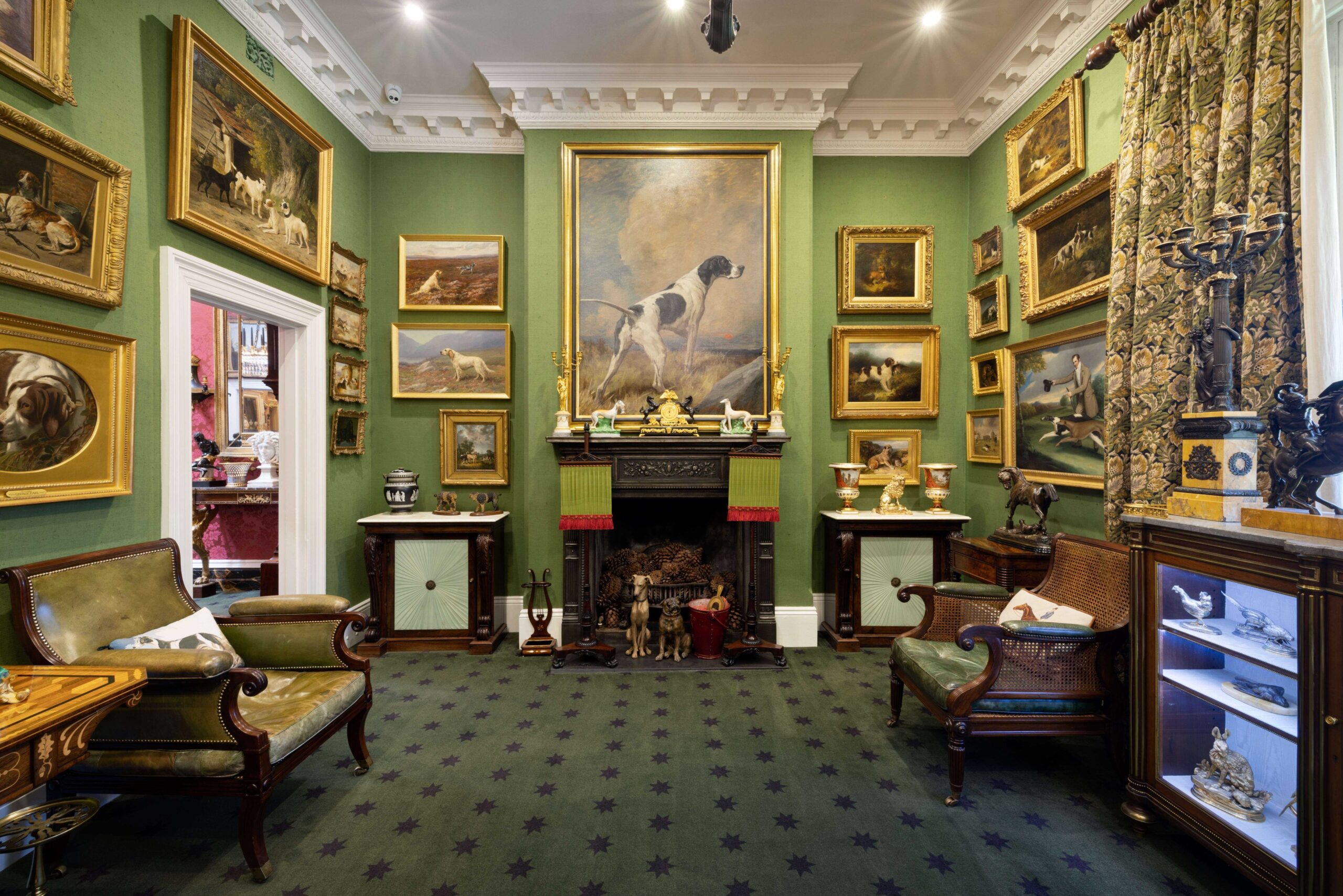
Without knowing the backstory, I think we can assume that Number 7A, 1948 was acquired for the purposes of social prestige and investment. At the other end of the collecting spectrum the David Roche Gallery in Adelaide holds the collection of the late David Roche AM (1930- 2013). David was born into wealth which allowed him to pursue his interests in dog breeding and antique collecting, and he did both with a single-minded passion. With dogs, he bred show winners all over the world, and became the first non-British resident to be invited to judge the Best in Show at the prestigious Crufts dog show. With antiques, it was for him the thrill of collecting. He inherited from his father a keen eye and the allure of the chase for the right artwork – his father advised: ‘Never buy anything just to fill in a spot but wait until you find exactly the right thing’. He combined that with a deep knowledge of his period of interest which was late 18th and early 19th Century European decorative arts. It gave him great joy in his own lifetime and he was determined to share that pleasure with others by creating the David Roche Foundation.
Take a look next time you are in Adelaide at this astonishing collection, and see what a lifetime of focused collecting can create.
The David Roche Gallery is located at 241 Melbourne Street, North Adelaide, South Australia 5006.
Visit the website at https://www.rochegallery.com.au/
Julian Bickersteth AO is Patron of ArtsNational and Chair of The David Roche Foundation
PATRICIA ROBERTSON FUND
CONSERVATION PROJECTS 2026
The Patricia Robertson Fund (PRF) is funded primarily from ArtsNational Society donations with the funds kept in a totally separate investment account from the rest of ArtsNational. These donations, as well as the interest earned from our savings, are normally what we have available to spend on conservation. Just for this year though, we have been given approval to increase our budget by drawing down some capital from the PRF account, thus improving our capacity to support the conservation profession.
With a budget of $35,000 for 2026, the PRF can now not only increase funding for conservation education, (mid-career scholarships and outstanding student awards), but also plan and deliver support to a greater number of actual conservation projects than we’ve been able to do in the past. Providing funding for conservation projects fits our philanthropic goal of supporting the vital service of Conservation to the Arts, by providing real work for the conservators.
How do we do it?
We set up an online and downloadable Expression of Interest form accessible from the ArtsNational website to receive applications from any institution holding cultural material (paintings, culturally significant objects, including indigenous works). A legal agreement was then drawn up for the successful applicants.
Who applied?
Museums and art galleries from across Australia – QLD, NSW, VIC and WA.
Results
Of the 17 excellent submissions received, we chose 6 and offered partial grants to 5 of the 6. Shoalhaven Historical Society received the full grant.
The Successful Submissions:
-
Castlemaine Art Museum Victoria – 1879 oil on canvas landscape by Louis Buvelot: “Mt Elephant from Emu Creek” $4,500
-
National Trust Qld – 19thC signed family bible “Wollston Bible” $2,650
-
Shoalhaven Historical Society NSW – Samuel Elyard oil on canvas landscape: “Sunset Sky” Late 19thC $3,774
-
State Library Queensland – Cecily Fearnley’s 1953 wedding dress $2,000
-
Subiaco Museum Western Australia – Architectural plans of residential development 1934 – 1939 $2,000
-
Western Australia Museum – Collection of 16mm films documenting early shipwreck discoveries $2,550
TOTAL FUNDS OFFERED $17,474
Most of these projects are set to start soon and will be completed this year.
Lucy Costas
Chair Patricia Robertson Fund
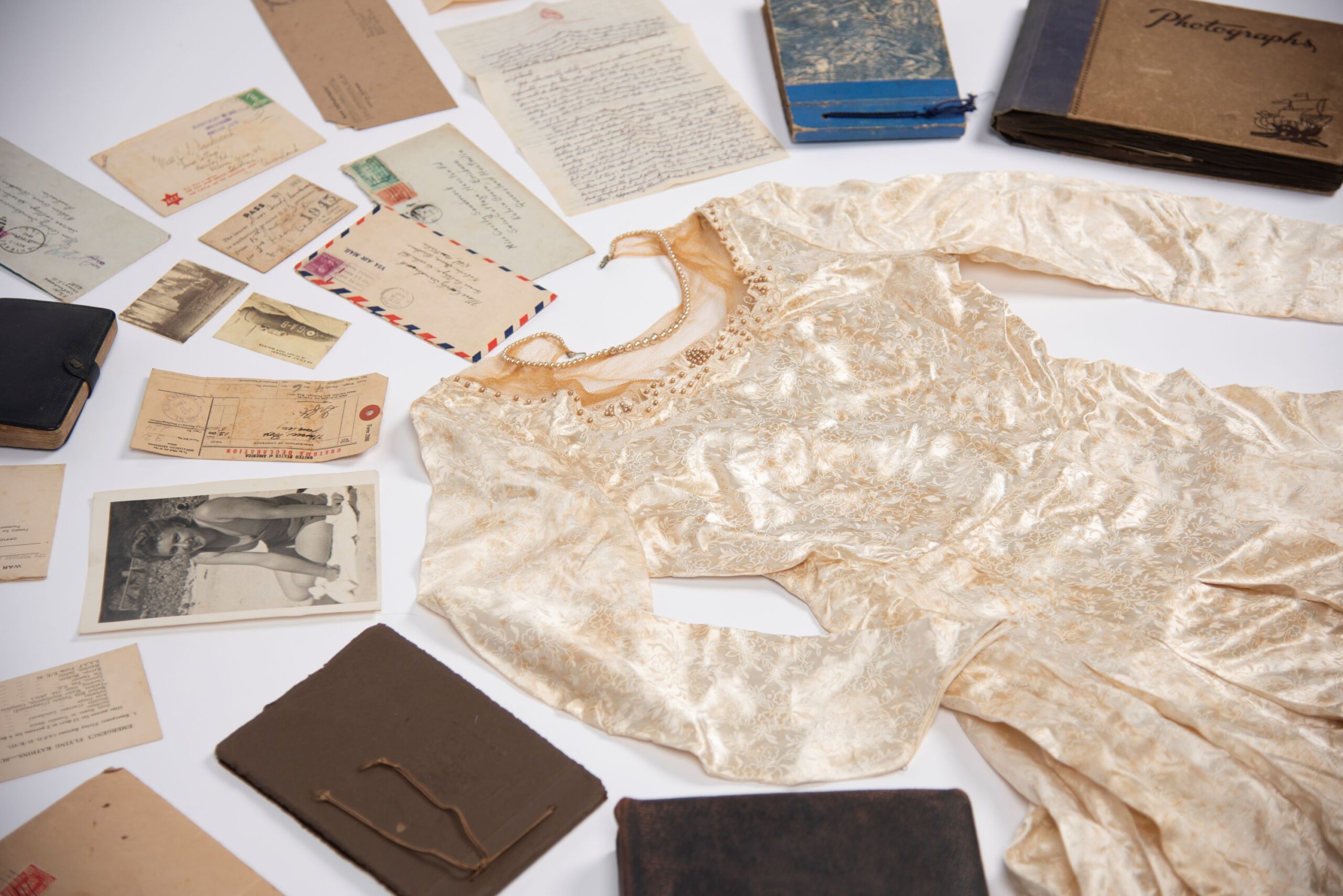
Brisbane John Oxley Library, State Library of Queensland
Photographer Leif Ekstrom
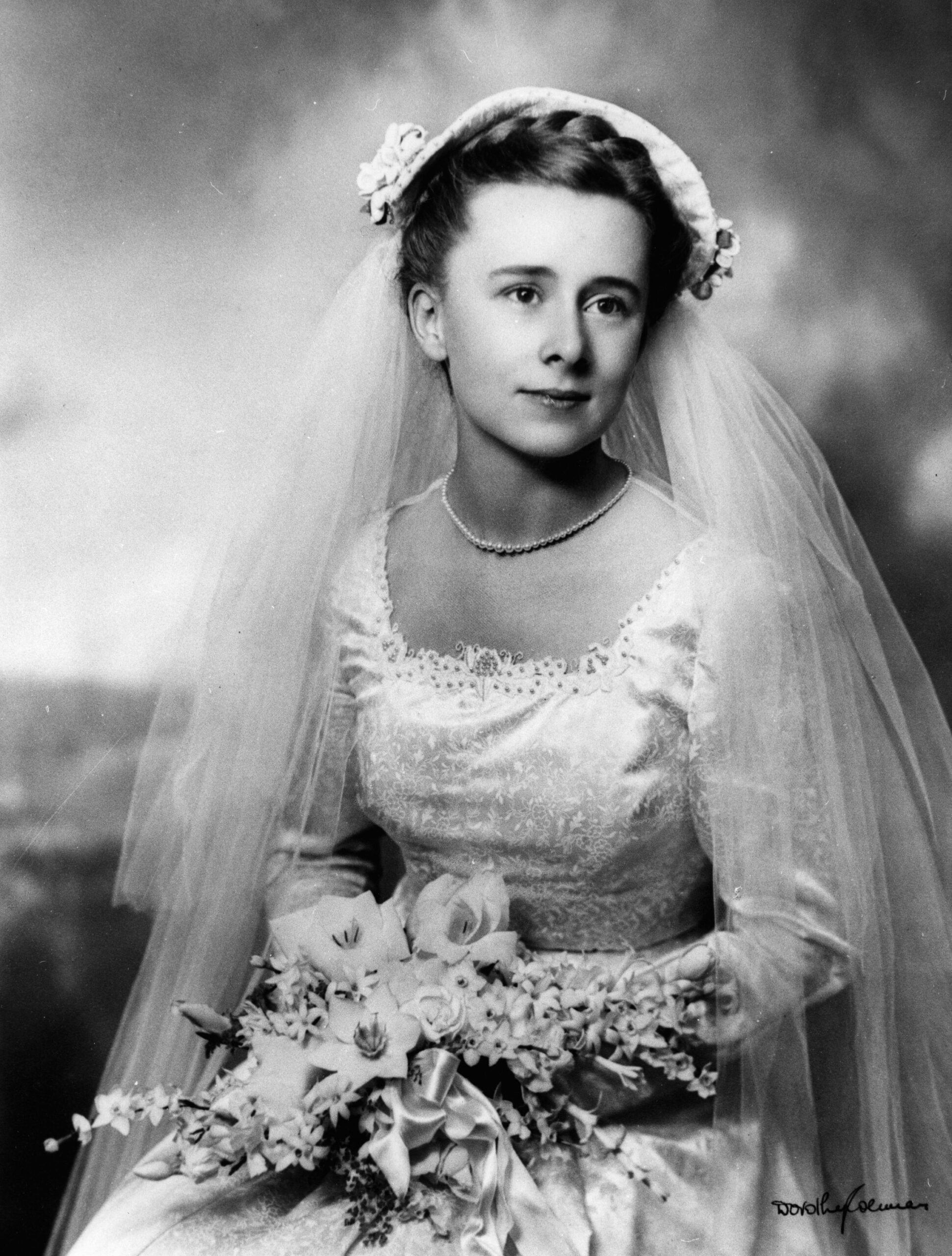
Coleman, Dorothy, 1899-1984.
Brisbane John Oxley Library, State Library of Queensland; 2005
ArtsNational Emerging Artist Prize
Now Open For Entries
The ArtsNational Philanthropic Fund Management Committee is thrilled to announce the launch of the inaugural ArtsNational Emerging Artist Prize.
Unlike art competitions which reward a single work, this prize recognises excellence in artistic practice. Professional visual artists and tertiary art students between the ages of 18 and 35 are invited to submit three original works, a statement outlining their artistic practice, and a guide to how they intend to use the $20,000 in prizemoney (should they win) to further their career.
Entries are now open and will close on August 31st. A shortlist of finalists will be announced on October 1st, with the winner declared on October 8th.
Our three judging panellists are all highly respected art professionals. Ron Ramsey is a former head of the Newcastle Art Gallery with curatorial experience at NGV, NGA, AGNSW and the Venice Biennale. He’s joined by Kate Elsey, landscape and abstract painter represented in over one hundred private collections globally, and Leigh Capel, art lecturer, dealer, valuer and director of Belle Epoque Fine Art.
Peter Farr has been tireless in his efforts, obtaining DGR status for the fund so donations to the ArtsNational Philanthropic Fund are tax-deductible. The ultimate aim is to position the Philanthropic Fund to be self-sustaining, a goal all the more possible thanks to recently appointed Philanthropic Fund committee member Belinda Wright, who was involved with the Macquarie Group Emerging Artist Prize for many years and has wide experience of philanthropic engagement in the arts, with a particular interest in regional Australia.
Above all, the ArtsNational Emerging Artist Prize will help to raise our organisation’s public profile. A defining feature of the award is the winner’s opportunity to connect with our national network of knowledgeable, passionate art lovers and collectors, whose proud tradition includes supporting emerging artists. In this way, we will honour our cultural legacy while helping the next generation of artists build on its foundations.
Call to Action – Apply Now!
If you know of a visual artist who meets the above criteria, please tell them about the ArtsNational Emerging Artist Prize. Entries are now open and can be submitted via the ArtsNational website here – ArtsNational Philanthropic Fund – ArtsNational
Any enquiries: Please contact Sally Louw, Chair of the Philanthropic Fund Management Committee
(E: Chair@artsnational.au).