Adelaide
ArtsNational Adelaide is one of thirty-six ArtsNational societies in Australia.
- Our lectures are delivered by renowned experts sourced locally, from the UK and Europe.
- We ensure friendly convivial hospitality for our members, their friends and the community
- We support young and emerging artists within local communities and nationally
- We believe that the arts enrich our lives.
We are a not for profit organisation run by a committee of volunteers. We aim to promote an interest in the study of decorative and fine arts by offering high quality lectures on a wide range of subjects including social history, gardening and design, architecture, textiles and music.
Lectures:
ArtsNational Adelaide hold two sessions of lectures on Wednesdays:
Morning Session
St Andrews Church: 43 Church Tce, Walkerville
Lectures commence at 10am. Morning Tea at 11am.
Afternoon Session
Burnside City Uniting Church: 384 Portrush Rd, Tusmore
Lectures begin at 7.30pm. Supper at approximately 8.30pm
Membership:
Annual membership
$225 single
$440 double
Click here to join or email: cathkerryfood@gmail.com
Special Interest Half Days are optional, and an additional fee applies. Registration forms are sent out approximately one month prior to the lecture.
Guests welcome:
Guests are most welcome with prior notice.
A $55 fee applies or $35 if you are a member of another ArtsNational society
Please phone: Cath Kerry on 0407 606 421
Membership between societies is non transferrable
Contact:
For all enquiries please email: cathkerryfood@gmail.com
Postal Address: G01/87 Rondo Ave, Findon SA 5023
ABN: 54 559 495 272
Committee
Chair: Louise Naughton
Secretary and Public Officer: Angel Murray
Treasurer: Sue Lester
Vice-Chair and Membership Secretary: Cath Kerry Ph: 0407 606 421
2027 PROGRAM
Wednesday 17 March 2027
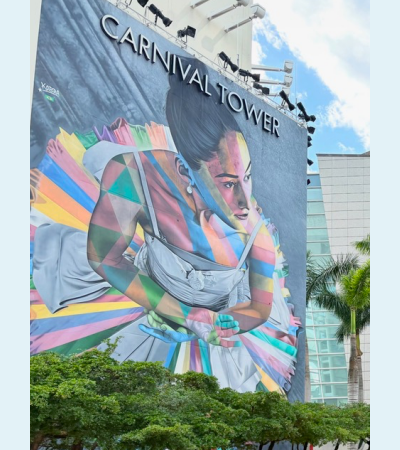
ART OR VANDALISM? THE SURPRISING SUCCESS OF STREET ART
Presented by GEORGINA BEXON
Morning: St Andrews Church: 43 Church Tce, Walkerville. Lecture at 10am followed by morning tea.
Afternoon: Burnside City Uniting Church: 384 Portrush Rd, Tusmore. Lecture at 7.30pm, supper afterwards.
‘Street Art’, regarded as one of the largest art movements of modern times, has achieved huge popularity and is still rapidly growing as an art form. It encompasses graffiti, protest art that speaks to political and social issues, and monumental painted murals. This talk explores the history of the medium from prehistoric times to the modern day and discusses how and why this art has ended up as a mainstream art practice exhibited in respected museums the world over.
Georgina is an international art historian, specialising in South Asian art, who has lived and worked in the UK, USA, and Singapore. Her practice includes lecturing, writing, consulting and collecting. She has developed a network of gallery and artist connections in Europe, the USA and India, which she visits regularly. Consultant Art Historian at the Oriental Club in London and an official tour guide at Tate Modern, Georgina also presents at leading art institutions and at international art conferences, most recently in New York, Paris and Lisbon. Georgina holds a BA in Art History from Southhampton University, an MA in Arts Management and Policy from City, University of London and an MA in Art History from SOAS, University of London.
Wednesday 21 April 2027
WHAT YOU SEE AND WHAT YOU GET: FIVE ADELAIDE HOUSES
Presented by DR JAMES CURRY
Morning: St Andrews Church: 43 Church Tce, Walkerville. Lecture at 10am followed by morning tea.
Afternoon: Burnside City Uniting Church: 384 Portrush Rd, Tusmore. Lecture at 7.30pm, supper afterwards.
Anyone who has sold a house knows the ritual: the light is chosen, the clutter cleared. Sometimes the furniture belongs to the stylist, leaving the owners barely able to recognise their own rooms. Yet on the strength of these photographs, people spend millions after perhaps fifteen minutes inside – and continue to study the images long after they have signed. That the house may be freezing in winter and an oven in summer seems beside the point. The styling sells.
Architectural photography is similarly transformative, with greater artistry. The finished image presents a house as its architect wishes: at the perfect hour, the garden mature, every trace of effort concealed. Beautiful and persuasive, it nevertheless keeps a few secrets.
This lecture examines five Adelaide houses through photographs, architects’ drawings and construction images. Never intended to charm, the construction photographs reveal what the finished image conceals: the true scale of a room, materials hidden behind plaster, and the moments drawings and buildings quietly diverged.
Behind every beautifully dressed architectural photograph lies another story – the compromises, decisions and work involved in making the building itself.
Dr James Curry is Director of International and Academic Engagement at the Architecture Museum, Adelaide University. His recent curatorial work includes Lust for Lifestyle: Modern Adelaide Homes 1950-65 and Modern Beach Homes 1950-65. He teaches architectural history and is completing a book on Peter Muller’s Michell House.
Wednesday 26 May 2027
ARTISTIC AND LITERARY CHELSEA
Presented by SIMON WHITEHOUSE
Morning: St Andrews Church: 43 Church Tce, Walkerville. Lecture at 10am followed by morning tea.
Afternoon: Burnside City Uniting Church: 384 Portrush Rd, Tusmore. Lecture at 7.30pm, supper afterwards.
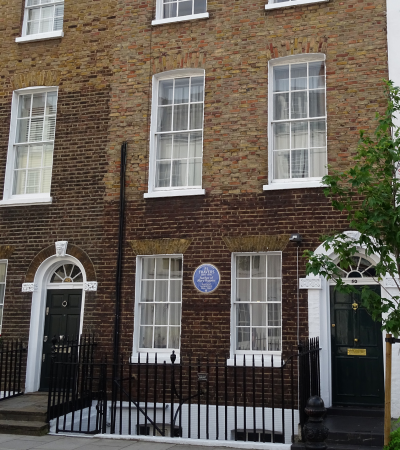
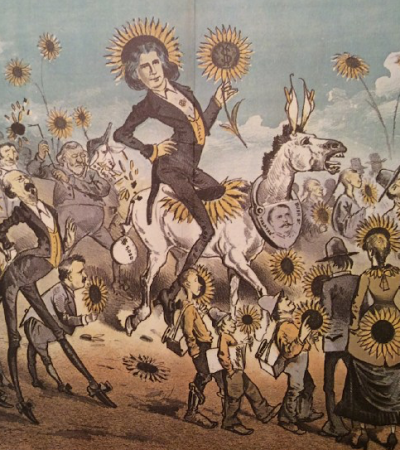
This lecture traces Chelsea’s transformation from riverside fishing village to one of London’s great bohemian, literary and artistic enclaves.
Beginning at Sloane Square, we uncover the curse of the boy who never grew up, discover where the ‘revolution in English theatre’ began and explore the work of one of Britain’s great ‘star’-chitects. Turning into Tite Street, we take tea with Oscar Wilde, encounter James McNeill Whistler and glimpse Ellen Terry stepping from her carriage to sit for John Singer Sargent.
Along the Thames, we pause at the extraordinary Chelsea Physic Garden before wandering through Cheyne Walk, where an astonishing cast of characters once lived: Rossetti, Swinburne, George Eliot, T. S. Eliot, Mrs Gaskell, Turner and three Rolling Stones. We meet Sir Thomas More at his medieval mansion, then return via the King’s Road for literary and Hollywood weddings – and a visit to 50 Smith Street, home of literature’s most famous nanny.
Simon Whitehouse is an award-winning London Blue Badge guide, lecturer, presenter and former actor. He has worked with Shakespeare’s Globe, the Royal Opera House, the BBC and the National Gallery and teaches British history, theatre, literature, art and culture to international audiences.
SPECIAL INTEREST HALF DAY WITH SIMON WHITEHOUSE
Thursday 27 May 2027
Presented by SIMON WHITEHOUSE
Time & Venue: 10am–1pm, TBA
Cost: Members $65, Visitors $70, Students $30 (includes morning tea)
TALK 1: WILDE ABOUT OSCAR
This talk examines the life and times of Oscar Wilde from his Irish roots to his days as a student at Oxford and his meteoric rise to the heights of celebrity. We travel with him to the United States and examine his starring role within the artistic and theatrical worlds of late 19th century London. We visit his home in bohemian Chelsea and some of his favourite West End haunts. Finally, we learn how ‘tired of being in the heights, he plunged into the depths’ and became famous for being infamous…
TALK 2: NOEL COWARD
‘I don’t know what it is, but I’ve got it!’ ‘It’ was ‘star quality’ and the person who had ‘it’ was Noel Coward. On the surface, Coward seemed simply to be an elegant camp man swanning about in a dressing gown who dropped acerbic one liners like cigarette ash from a long cigarette holder, writing plays about bright young things appearing through a set of French windows saying ‘anyone for tennis?’. In fact, Coward was one of the most versatile cultural figures of the 20th century and his career is the history of 20th century British theatre. Despite his claim to only have a ‘talent to amuse’, like Oscar Wilde, he took his work seriously. His private and often tumultuous love life enabled him to shine a light on the passion and pain of human relationships and give us in depth observations of class and society!
Wednesday 23 June 2027
THE CIVILIZING TABLE
Presented by CATH KERRY
Morning: St Andrews Church: 43 Church Tce, Walkerville. Lecture at 10am followed by morning tea.
Afternoon: Burnside City Uniting Church: 384 Portrush Rd, Tusmore. Lecture at 7.30pm, supper afterwards.
We have always wanted to gather for a meal with others, first for safety, then to share resources and of course for sheer pleasure. The table is the most important piece of furniture in the house but the concept of a dining room is only 200 years old. At the table we share stories, create memories, bond and strengthen relationships. At a young age, we learn patience and how to listen.
In this lecture, we will take a delicious trawl through art history with paintings of banquets, from peasant gatherings to extravagant excess, then onto more intimate groups. Cosy dinners, family dinners and even following the Duchess of Bedford in an afternoon tea brings us together.
Cath Kerry was born in Algeria: French mother and English father. She was a teacher (French, English and Cinema) before becoming a chef and restauranteur. While director of the Art Gallery Restaurant (SA), she received the National Restaurant & Catering Lifetime Achievement Award for Commitment and Service to the Industry. Board member and Chair (2011) of SA Restaurant & Catering Association and Chair of Judges (SA), she trained and coordinated judges for the Restaurant Awards for Excellence. Cath became a trained Art Gallery Guide in 1992.
SPECIAL INTEREST HALF DAY WITH CATH KERRY
Thursday 24 June 2027
Presented by CATH KERRY
Time & Venue: 10am–1pm, The Queen Adelaide Club
Cost: Members $65, Visitors $70, Students $30 (includes morning tea)
TALK 1: GASTRONOMY AT THE ART GALLERY OF SOUTH AUSTRALIA
Gastronomy is more than recipes, dinner parties and MasterChef. It is the study of food in its broadest cultural, scientific, social and political context: the how, why, with whom, where and when of eating. Established in 2002, Adelaide University’s Graduate Degree Program in Gastronomy offered students a reprieve from the lecture room with a tour of the Art Gallery of South Australia led by Cath Kerry. This lecture discusses works of art within the Art Gallery of South Australia’s collection, exploring what paintings can reveal about food, eating and society. We’ll also discover special objects surrounding the meal: a 14th-century salt cellar signalling status, an Arts and Crafts wine decanter, a Persian bowl, Clarice Cliff and Laura Knight’s Circus dinner service, and Carlo Bugatti’s extraordinary café tables.
TALK 2: THE LAST SUPPER
Is this the most famous dinner party of all time? Leonardo’s Last Supper is only one of many depictions of this iconic gathering. From Renaissance Florence to Peru and Plautilla Nelli to Salvador Dalí, these paintings reveal changing ideas about food, status and companionship. Who are these people? What are their relationships? And why aren’t they all sitting down?
Wednesday 21 July 2027
THE SCIENCE AND ART OF COLOUR IN ENGLISH GARDEN DESIGN: GARDENING AS FINE ART
Presented by TIMOTHY WALKER
Morning: St Andrews Church: 43 Church Tce, Walkerville. Lecture at 10am followed by morning tea.
Afternoon: Burnside City Uniting Church: 384 Portrush Rd, Tusmore. Lecture at 7.30pm, supper afterwards.
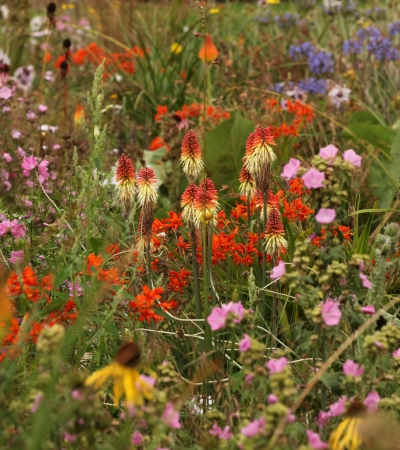
In 1882 Gertrude Jekyll wrote a short but seminal article in ‘The Garden’ in which she urged the readers to ‘remember that in a garden we are painting a picture.’ As an accomplished watercolour artist, Miss Jekyll was familiar with the principles of using colours, but she felt that in gardens these principles ‘had been greatly neglected’.
This talk looks at how to apply these principles in designing a border but it also looks at the ways in which a border is different from a painting. It looks at how contemporary work by the likes of Turner, Monet, Rothko and Jackson Pollack, evolved in parallel with ideas about what a garden or border should look like.
Timothy Walker reads Botany at University College Oxford. After graduation, he worked as a trainee at Oxford Botanic Garden, the Savill Garden Windsor and the Royal Botanic Gardens Kew. In 1985 he was awarded a Master of Horticulture by the Royal Horticultural Society of London. From 1988 to 2014 he was director at the Oxford Botanic Garden (OBGHA) and between 1992 and 2000 the OBGHA won 4 gold medals at the Chelsea Flower Show London. In 2009 the Botanic Garden was awarded a Queen’s Anniversary Prize for providing imaginative educational programs for adults, students, children, and the general public. In 2010, Timothy was elected as a Fellow of the Linnaean Society of London and in the same year he presented a 3-part series of films on the history of botany on BBC4. Since 2014 he has been a Senior College Lecturer in Plant Biology at Somerville College, Oxford.
Wednesday 25 August 2027
GREAT FEMALE ARTISTS OF THE AVANTE-GARDE: FROM EMBROIDERY TO THE REVOLUTION
Presented by DR NATALIA MURRAY
Morning: St Andrews Church: 43 Church Tce, Walkerville. Lecture at 10am followed by morning tea.
Afternoon: Burnside City Uniting Church: 384 Portrush Rd, Tusmore. Lecture at 7.30pm, supper afterwards.
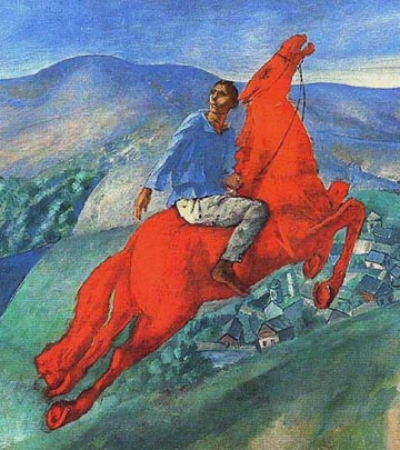
In line with the retrospective of leading Russian woman-artist Natalia Goncharova, held at Tate Modern in summer 2019, this lecture is dedicated to the amazons of the Russian avant-garde, whose art challenged traditional aesthetic values and redefined the boundaries between art and life. Working almost entirely within the male exhibition-and-sales paradigm, these women considered themselves artists first and became zealous participants in a great aesthetic revolution. Revolutionary in their art and politics, they seized the freedom of the first decades of the 20th century to forge a remarkable path through artistic movements.
Dr Natalia Murray was born in St Petersburg, where she gained BA and MA degrees in Art History at the Academy of Fine Arts before undertaking a PhD at the Hermitage Museum. In 2015, she was awarded a PhD by the Courtauld Institute of Art. She currently works as an independent curator and lecturer at the Courtauld, where she teaches the MA course on the role of exhibitions and private collections in Europe from 1863–1930.
Natalia is currently working on exhibition projects in London, Paris and the US. Her books and articles span the broad field of 19th- and 20th-century European art, and she has featured in films and art programs on BBC 4, BBC Radio 4 and the BBC World Service. Natalia is also a trustee of the Avant-Garde Art Research Project, a UK-based charity sharing her aspiration to reduce the number of fakes on the art market.
Wednesday 22 September 2027
COURTING DISASTER? DRESSED FOR SUCCESS AT THE GEORGIAN COURT
Presented by JACQUI ANSELL
Morning: St Andrews Church: 43 Church Tce, Walkerville. Lecture at 10am followed by morning tea.
Afternoon: Burnside City Uniting Church: 384 Portrush Rd, Tusmore. Lecture at 7.30pm, supper afterwards.
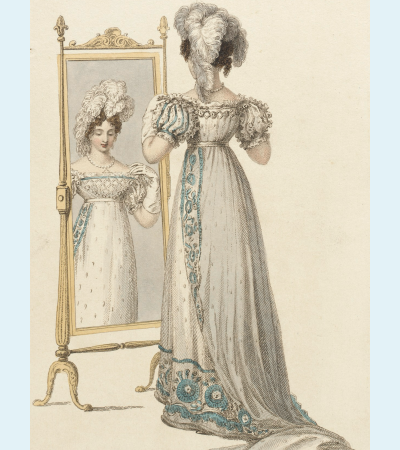
To enter the coveted royal court, you first had to acquire the correct clothing and deportment. The wig and sword marked a gentleman (though these could be hired for the occasion). Women were required to wear wide-hooped petticoats and other outmoded accessories that were expensive and difficult to manage. Many ‘mortifying disasters’ are reported as the ‘real’ failed to live up to the ‘ideal’ in hairdressing, dress, dancing or behaviour. Drawing upon paintings, prints, letters and surviving garments, we shall subject Georgian courtiers to as much scrutiny as they received among the aristocracy of their day.
Jacqui Ansell studied History of Art and Theory at the University of Essex before gaining an MA in History of Dress from the Courtauld Institute. Formerly an Education Officer at the National Gallery, London, and a tutor and writer for the Open University, she lectures for the National Gallery, National Portrait Gallery and Wallace Collection. An expert on Court Dress, Grand Tour portraiture, Welsh Costume and decoding dress in portraits, she has contributed essays and numerous National Gallery podcasts and appears on its YouTube channel. As Senior Lecturer at Christie’s Education, London, she prepared future fine and decorative arts specialists for the auction world. She has written and presented online courses on art, design and women artists. She is currently writing books on fashion in National Gallery paintings and Vincent van Gogh’s time in England in 1876.
Wednesday 20 October 2027
HOW TO LOOK SLOWLY: IMPRESSIONISM
Presented by JOANNE RHYMER
Morning: St Andrews Church: 43 Church Tce, Walkerville. Lecture at 10am followed by morning tea.
Afternoon: Burnside City Uniting Church: 384 Portrush Rd, Tusmore. Lecture at 7.30pm, supper afterwards.
Looking slowly at an Impressionist painting might at first seem counterintuitive, since one concept associated with Impressionism is that the artist quickly captures a fleeting moment in paint. Although Impressionist works often appear to have been created quickly, this was not always the case – they were frequently the result of careful observation and planning. The paintings are an invitation to dwell upon and enjoy the evocation of transitory effects. Looking slowly at an Impressionist painting is to engage with the idea of seeing a moment that might pass unnoticed in lived experience, but which the artist was keen to represent to produce visual pleasure. To appreciate the artist’s work, we need to slow down. Touches of paint, punctuations of colour and varied textures come alive with sustained looking. This presentation considers a small selection of works to experience Impressionism, with particular attention to the innovations of the style and the development of visual analysis skills.
Joanne holds an MA in History of Art from University College London and has held various roles at the National Gallery, including Head of Adult Learning Programs. She has also taught for Tate, the Hayward Gallery, Sotheby’s Institute of Art and the National Portrait Gallery, and led excursions in the UK and abroad. She is currently a Panel Tutor at the University of Cambridge and teaches for the Victoria & Albert Museum and Wallace Collection. Her specialisations include 19th- and early 20th-century French art and the practice of sustained looking.
Wednesday 24 November 2027
MINING, MALACHITE AND JEWELLERY
Presented by DR JO VANDEPEER
Morning: St Andrews Church: 43 Church Tce, Walkerville. Lecture at 10am followed by morning tea.
Afternoon: Burnside City Uniting Church: 384 Portrush Rd, Tusmore. Lecture at 7.30pm, supper afterwards.
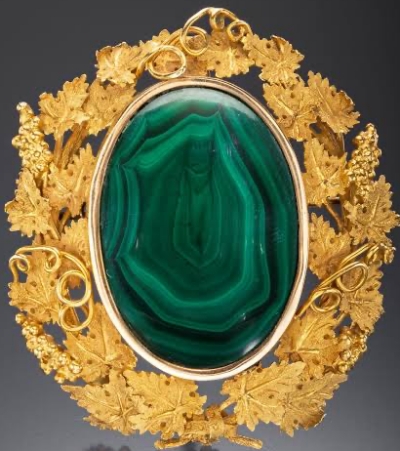
Malachite brooches are masterpieces of South Australian colonial jewellery which celebrate our early mining history. In the 19th century, when our state was still a colony, it was known across the globe as ‘The Copper Kingdom’ and in 1855, Burra was not only producing almost 20% of the world’s copper, it was famed for the quality of its gem grade malachite. Malachite brooches also reference the goldrush in the late 1860s which produced around 100,000 ozs of gold. This illustrated talk will bring our robust mining history to the fore by exploring our delicate and distinctive malachite jewellery and
the early South Australian gold and silversmiths who created these expressions of colonial wealth.
Dr Jo Vandepeer is a South Australian historian specialising in art history. Her PhD and Masters theses focused on the Adelaide School of Design. Jo’s research has been recognised with the Peter Walker Fine Art Writing Award and the James MacGinley Award. Her work is regularly published in the national Australiana magazine. Jo is busy mounting a major exhibition at the David Roche Museum in 2027.