Molonglo Plains (Queanbeyan)
ArtsNational Molonglo Plains welcomes you
ArtsNational Molonglo Plains offers a program of daytime lectures and Special Interest Mornings for members in and around Queanbeyan and the ACT, and particularly welcomes members from rural and regional areas.
We offer a stimulating illustrated lecture program from UK and Australian lecturers on a wide range of subjects relating to visual, creative, decorative and performance arts. All lectures are followed by a convivial afternoon tea.
Our society also provides membership outings and events and is a strong supporter of local Young Arts programs.

Lectures:
Venue: Lectures are held in the C3 Church auditorium, 116 Monaro St Queanbeyan NSW. Entry is from the rear, via the Rutledge Carpark.
Click here for parking information.
Time: Lectures are on Thursday afternoons, commencing at 2pm. Please note that Special Interest Mornings are separately scheduled.
Annual Membership:
$220 single
$400 double
Rural Residents rate: Special rate per person for rural residents residing substantially outside Queanbeyan and the ACT. Applicants must first contact Membership Secretary to confirm eligibility and obtain rate.
Click here to join
Guests welcome:
Non-member: $35
Member of other ArtsNational society: $30
Guest of ABSENT Molonglo Plains member: Complimentary (on production of absent member’s badge and prior advice from the member.)
Visitor payments may be made online in Trybooking. Please click the link under your choice of lecture. Payments may also be made at the venue by card, cash or Visitor Pass.
Visitor Passes (value $35) are allocated to members who have subscribed by 11 December 2026 (Early Bird Offer) but may also be purchased. Please contact Membership Secretary for details at membership@artsnationalmp.au.
Contact and Membership Enquiries:
Membership enquiries: Email membership@artsnationalmp.au or phone Jessica Cameron on 0424 229 569.
All other enquiries please email chair@artsnationalmp.au
Postal Address: PO Box 1005 Queanbeyan NSW 2620
ABN: 23 803 895 180
Committee
Chair: Lindy Ross Email: chair@artsnationalmp.au
Treasurer: Lydia Melnikoff
Secretary: Susie Ryrie
Membership: Jessica Cameron Ph: 0424 229 569
2027 PROGRAM
Thursday 18 February 2027
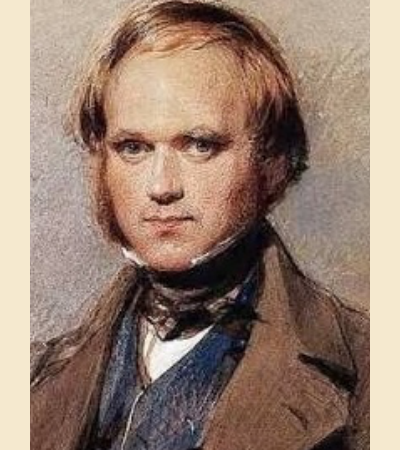
CHARLES DARWIN IN AUSTRALIA
Presented by Paul Brunton
Venue & Time: C3 Church, 116 Monaro St, Queanbeyan, 2pm
Charles Darwin (1809-1882) published On the Origin of Species, his most famous book, and one of the most influential works ever published, in 1859. His voyage around the world on Beagle, 1831-1836, provided the impetus for his theory of natural selection. From January to March 1836, Beagle was in Australian waters and Darwin spent time in Sydney, travelling over the Blue Mountains to Bathurst; Hobart and King George Sound. This lecture, illustrated with contemporary drawings and watercolours, charts Darwin’s time in Australia: his thoughts on the colony; his socialising and, most importantly, the research he was undertaking which would ultimately lead to his great book.
Paul Brunton is Emeritus Curator, State Library of New South Wales and an Honorary Associate of the School of Philosophical and Historical Inquiry, University of Sydney. He was Senior Curator, Mitchell Library, State Library of New South Wales, from 2002–12 and Curator of Manuscripts from 1986 to 2001. He is preparing an annotated edition of the original handwritten journal and logbook of William Bligh kept on HMS Bounty, 1787–1789, for publication by Allen & Unwin.
Thursday 11 March 2027
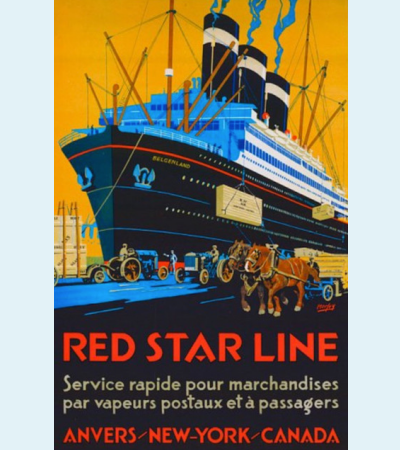
THE ELEGANCE OF THE OCEAN LINER
Presented by Georgina Bexon
Venue & Time: C3 Church, 116 Monaro St, Queanbeyan, 2pm
The glitz and glamour of the ocean liner, from its 1910 and ’20s heyday to modern times. Early ship design and décor was often utilised to resemble a British stately home or an Italian palazzo and intended to imbue passengers with a sense of extravagant comfort, status and luxury. Designers embraced different artistic styles, from neoclassical and baroque to art nouveau and art deco to create ever more impressive and beautiful interiors. This talk takes in exquisite gilded ballrooms, grand balustraded staircases and sumptuous panelled smoking rooms whilst examining the fascinating social and design history of these ‘floating palaces’.
Georgina Bexon is an international art historian specialising in South Asian art. Having lived and worked in the UK, USA and Singapore, she brings a rich international perspective to her lecturing. She has cultivated close connections with galleries and artists across Europe, America and India. Georgina is Consultant Art Historian at London’s Oriental Club, an official guide at Tate Modern, and a Fellow of both the Royal Society of Arts and the Royal Asiatic Society.
Thursday 22 April 2027
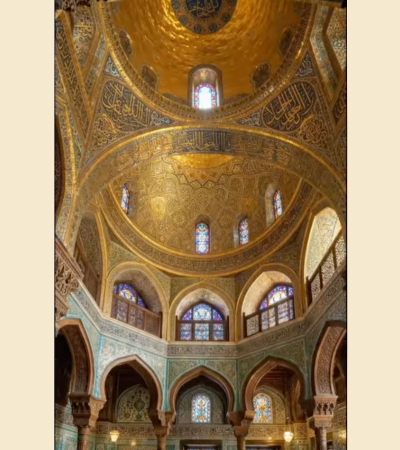
LEIGHTON HOUSE AND THE HOLLAND PARK CIRCLE OF ARTISTS
Presented by Anne Harbers
Venue & Time: C3 Church, 116 Monaro St, Queanbeyan, 2pm
On a back street in London’s Holland Park sits a solid red brick residence, once the house and studio of gentleman, collector and artist Frederic Leighton with its exotic interiors, complete with golden dome and tinkling indoor fountain. Building commenced in 1865, and this extraordinary residence was created to show an exotic collection of tiles, ceramics pots and carpets, and also to host fellow artist and society figures. This talk introduces not only this exotic interior but also the many artists of the Holland Park Circle.
Anne Harbers received her M. Art History from the University of Sydney in 2014. She also holds an MBA & Master’s degree in science and worked for 30 years in medical research and international business, and works as a university lecturer within the business faculty. Her current art history research interests lie in Dutch 17th century art, and 17th to 19th century European Art and Decorative Arts. She has published on collecting, art and science.
SPECIAL INTEREST MORNING with Anne Harbers
Friday 23 April 2027
Venue & Time: 10 – 12:30pm C3 Auditorium, 116 Monaro Street, Queanbeyan.
Two one-hour talks around a delicious morning tea.
Lecture 1: Australian Impressionists in France
From the 1880s, Australian artists joined the many who flocked to the art world of Paris including E. Phillips Fox, John Russell, and G.W. Lambert. Friendships were formed with local painters such as Claude Monet, and Vincent van Gogh. In the early 1900s, women artists such as Margaret Preston and Hilda Rix Nicholas were working also in Paris and travelling to artist colonies on the French coast. Some ventured to northern Africa to catch the stronger light in their art. How did these artists bring back their experiences to Australia and influence our own familiar Golden Summers paintings of the Australian Impressionist era.
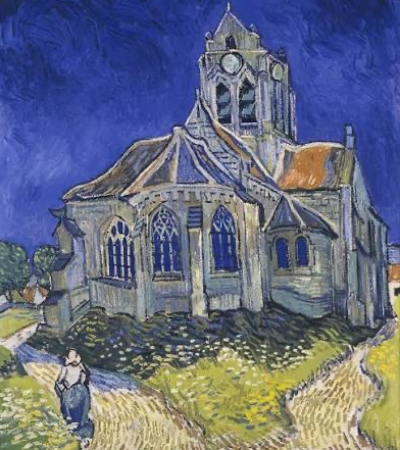
Lecture 2: The Last Years of Vincent Van Gogh- Provence and Auvers
The Van Gogh Museum in Amsterdam recently celebrated 50 years since they opened with a special exhibition on the final months of Vincent’s life and art. He arrived in Auvers near Paris in May 1890 and died there in July 1890. In the two years prior, Vincent van Gogh went to Arles in Provence in 1888, spending a year in St. Remy from May 1889. It is from these years that many of the much-loved artworks of Van Gogh were painted. This talk will explore the late years of van Gogh and the many beautifully executed paintings from these final years.
Thursday 20 May 2027
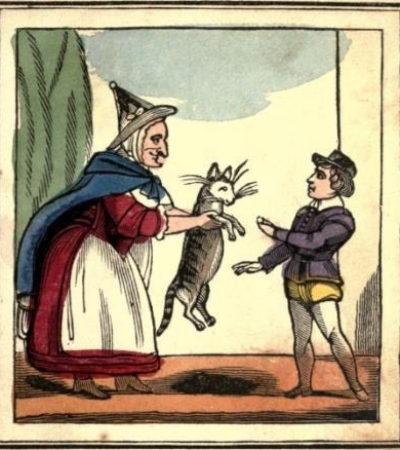
DICK WHITTINGTON: International Man of Myth and Mystery
Presented by Simon Whitehouse
Venue & Time: C3 Church, 116 Monaro St, Queanbeyan, 2pm
For many, Dick Whittington is simply a fictional character. Apprenticed to a master mercer, Whittington became one of the wealthiest and most successful textile merchants in the City of London, bankrolling three medieval kings and holding the office of Lord Mayor of London four times. What of that famous feline companion, his cat? Find out.
Simon Whitehouse is a (recovering) actor, lecturer, presenter, voice teacher and award-winning London Blue Badge guide. He has worked as an in-house guide at Shakespeare’s Globe, the Royal Opera House, the BBC and the National Gallery for both public and private tours. Simon is an adjunct professor for a number of US college study abroad programs teaching aspects of British history and culture.
Thursday 17 June 2027
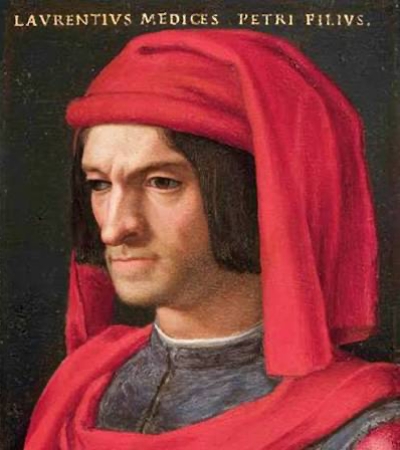
THE ART OF BEING MAGNIFICENT: Lorenzo de’ Medici and the Florentine Renaissance
Presented by Nick Eckstein
Venue & Time: C3 Church, 116 Monaro St, Queanbeyan, 2pm
In fifteenth-century Florence, ‘magnificence’ was not a casual word to describe anything splendid or worthy of admiration. To patrons of art like Lorenzo de’ Medici, and to his circle of elite friends and supporters, ‘magnificence’ was a concept firmly rooted in classical ideals. Wealthy citizens like Lorenzo were expected to spend lavishly – on art, architecture, festivals and public works – in ways that would bring fame and honour to the entire city, as well as reflecting glory on its chief patron. Illustrated at every point, this lecture explores the lavish visual culture created by Lorenzo.
Nick Eckstein is a historian with an international reputation for his innovative research into the society and culture of Renaissance Florence. As Cassamarca Associate Professor of Italian Renaissance History, Nick taught and researched in the History Department at the University of Sydney for 22 years. Recipient of numerous Australian Research Council grants, Nick is also a former Deborah Loeb Brice fellow (1999-2000) and Visiting Professor (2003, 2006) at the prestigious Harvard University Center for Italian Renaissance Studies, ‘Villa I Tatti’, in Florence.
Thursday 15 July 2027
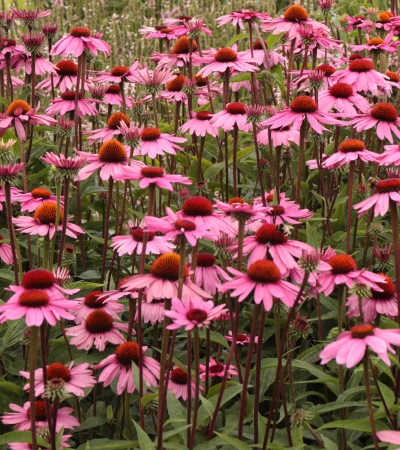
THE HEALING POWER OF PLANTS: Not an Alternative but the Real Thing
Presented by Timothy Walker
Venue & Time: C3 Church, 116 Monaro St, Queanbeyan, 2pm
Mankind has exploited the medicinal properties of plants for thousands of years, yet the role of plants in modern medicine is still considered to be peripheral by many people. We will attempt to put the record straight and to show that plant products are used every day by all of us to relieve pain and suffering, to heal wounds and cure diseases.
Timothy Walker is a distinguished botanist, horticulturalist and lecturer. After studying Botany at Oxford, he trained at Oxford Botanic Garden, Savill Garden and Kew. During his 26-year tenure as Director of Oxford Botanic Garden, it won four Chelsea Flower Show gold medals and a Queen’s Anniversary Prize. Timothy presented a BBC Four series on the history of botany and is now Senior College Lecturer in Plant Biology at Somerville College, Oxford.
Thursday 19 August 2027
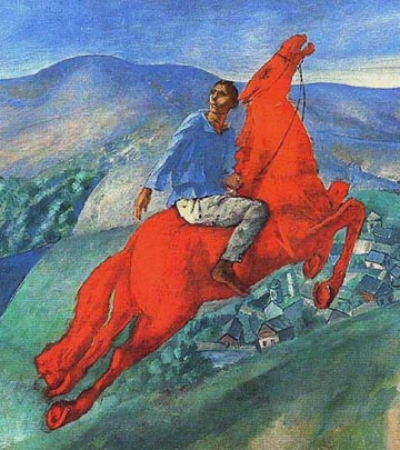
ART FOR THE NEW SOCIETY: Russian Art in the Service of the Revolution
Presented by Natalia Murray
Venue & Time: C3 Church, 116 Monaro St, Queanbeyan, 2pm
Already in 1917 the leader of the new Bolshevik State, Vladimir Lenin, proclaimed that culture should support political needs, which effectively meant that all culture was now viewed as propaganda. Like Lenin, Trotsky believed that ‘the essence of the new culture will be not an aristocratic one for a privileged minority, but a mass culture, a universal and popular one.’ This lecture will examine the impact of the 1917 revolution on artists and the quest of the new government for a new form of proletarian art. How was this to be defined? How would it come about? Where did it go? We will look at the first expressions of so-called proletarian art after the revolution – especially Lenin’s Plan for Monumental Propaganda – a strategy that employed visual monumental art as an important means of propagating revolutionary and Communist ideas. We will look at the new role of art and avant-garde artists after the 1917 October Revolution. Was art useful for the socialist revolution or was revolution useful for art?
An art historian, curator and lecturer whose expertise spans 19th- and 20th-century European and Russian art, Dr Murray studied at the Academy of Fine Arts and the Hermitage Museum before completing her PhD at the Courtauld Institute. She curated the Royal Academy’s acclaimed 2017 exhibition Revolution: Russian Art, 1917–1932 and has worked on other major exhibitions internationally. An accomplished author and broadcaster, Natalia is also a trustee of the Avant-Garde Art Research Project.
Thursday 16 September 2027
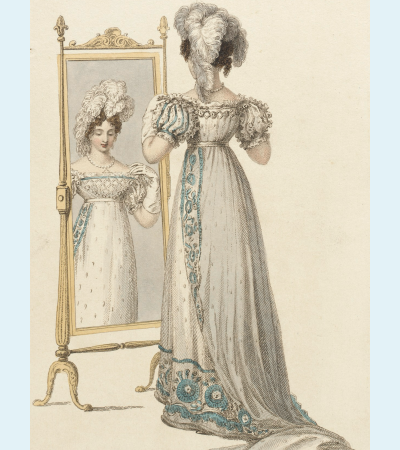
COURTING DISASTER? Dressed for Success at the Georgian Court
Presented by Jacqui Ansell
Venue & Time: C3 Church, 116 Monaro St, Queanbeyan, 2pm
To enter the coveted royal court, you first had to gain the correct clothing and deportment. The wig and sword were the mark of a gentleman (though these could be hired for the occasion). Women were required to wear wide hooped-petticoats, and other outmoded accessories that were expensive to obtain and difficult to manage. Many ‘mortifying disasters’ are reported as the ‘real’ failed to live up to the ‘ideal’ in styles of hairdressing, dress, dancing or behaviour. Drawing upon paintings, prints, letters, and surviving garments we shall seek to subject Georgian courtiers to as much scrutiny as they received amongst the aristocracy of their day.
Jacqui Ansell is an art historian and highly regarded specialist in the history of dress, portraiture and fashion. She has worked in Art Education at the National Gallery and Christie’s and lectures regularly for the National Gallery, National Portrait Gallery and Wallace Collection. Her particular interests include Court Dress, Grand Tour portraiture, Welsh costume and the fascinating clues provided by dress in paintings. Jacqui contributes to National Gallery podcasts and to leading collections and publications.
Thursday 14 October 2027
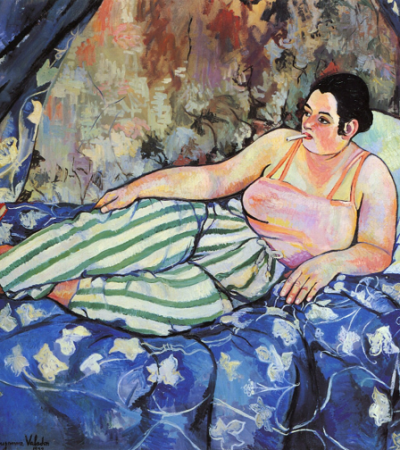
BREAKING THE MOULD: Suzanne Valadon
Presented by Joanne Rhymer
Venue & Time: C3 Church, 116 Monaro St, Queanbeyan, 2pm
Suzanne Valadon (1865-1938) defied expectations. Born to a working-class, single mother, she grew up in Montmartre, Paris, a vibrant but, in parts, impoverished neighbourhood. From an early age, Valadon posed as an artist’s model for renowned painters including Renoir and Toulouse-Lautrec. This experience exposed her to the artistic process and inspired her to begin painting herself—an uncommon path for a woman of her background and straitened circumstances.
How did Valadon reject conventional expectations of femininity and class to cultivate a bold, expressive, and often provocative style? Encouraged by artist, Edgar Degas, she developed a distinctive approach to form and colour, marked by strong outlines. Not only was she among the few women artists to depict the female nude during the first half of the 20th century, but Valadon also redefined the subject. Rather than presenting women as passive subjects of desire as convention had dictated, we will see how Valadon re-presents images of the female nude as self-possessed individuals.
Joanne Rhymer, an art historian and lecturer, specialises in 19th- and early 20th-century French art. She was an Art Educator at the National Gallery, and has taught at many of London’s leading cultural institutions, including Tate, the Hayward and the National Portrait Gallery. A Tutor at the University of Cambridge, she teaches for the Victoria & Albert Museum and Wallace Collection. She has a passion for the art of looking closely and thoughtfully at paintings.
Thursday 18 November 2027
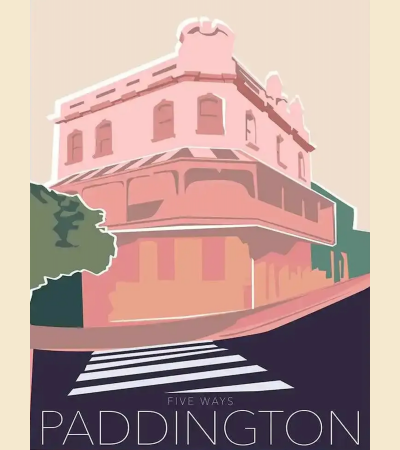
PADDINGTON: The Arts Hub of Sydney
Presented by Peter McNeil
Venue & Time: C3 Church, 116 Monaro St, Queanbeyan, 2pm
Paddington is possibly Australia’s most loved suburb. It is renowned as an almost intact nineteenth-century precinct. Once shabby and down at heel, by the 1960s it was Sydney’s ‘arts hub’. How and why did this happen? What makes Paddington so loved by our creatives? How did the galleries start up? By the 1970s the suburb was brimming with artists, writers, musicians, designers, journos and film-makers. We walk by Margaret Olley’s object-strewn studio. We see Paddington inspired textiles and wallpapers. We pass entertainer Jeanne Little and decorator husband Barrie in Paddington St. We look through the window at the antique shops, florists and interior designers of the ‘80s and ‘90s. Lunch at Lucio’s is included (but only via imagery).
Dr Peter McNeil is Distinguished Professor of Design History at UTS. From 2008-18 he lived and worked in three countries, being Foundation Professor of Fashion Studies in Sweden and Academy of Finland Distinguished Professor, Helsinki. His acclaimed book Pretty Gentlemen, on Macaroni Men and the 18th century fashion world, was published with Yale University Press in 2018. He was the main writer for Los Angeles County Museum of Art’s travelling exhibition ‘Reigning Men’ (2016-18) and has worked with communities and museums around the world.