Yarra
ADFAS Yarra welcomes you.
You are warmly invited to join us at ADFAS Yarra to explore the fascinating world of the Decorative and Fine Arts. Visual and performing arts, history and literature form the basis for the nine beautifully illustrated lectures that are presented during the year by international and local experts. You will be able to share refreshments after each lecture with like-minded members in a convivial and welcoming atmosphere. Regular newsletters will provide you with information on lecturers, art news, optional excursions and enrichment events.
‘Art is everywhere, if only you have eyes to see it.’
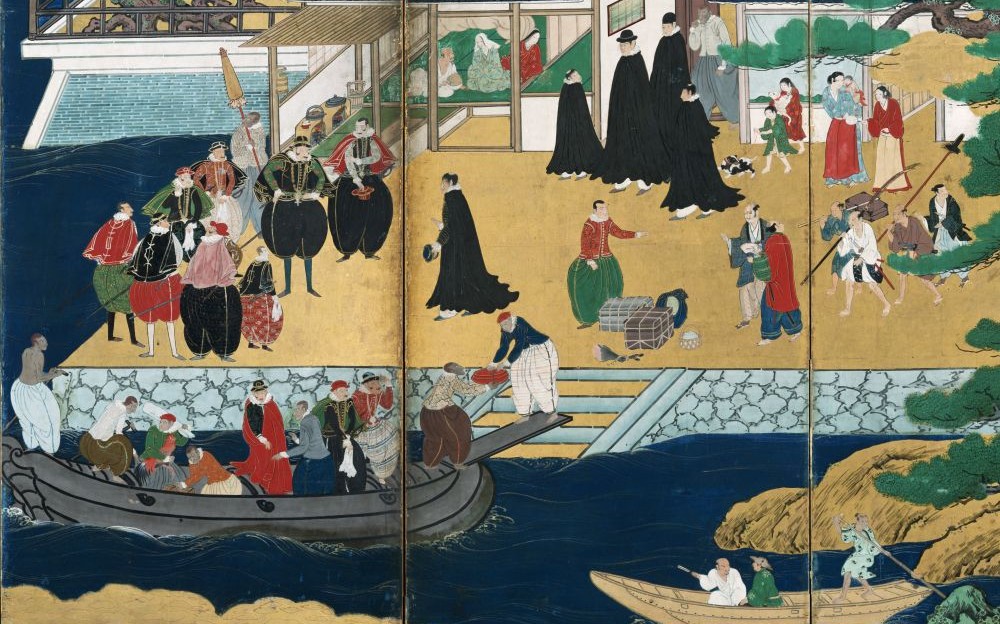
Kano Sanraku Namban screen: Meeting of Japanese and Portuguese c1700
 Lectures:
Venue:
Lectures are held in the Glen Eira Town Hall, corner Glen Eira and Hawthorn Roads, Caulfield. Parking, including disabled parking, is available in the Town Hall’s car park and surrounding streets.
Time:
Lectures are on Thursdays at:
Morning lectures: 10 am
Afternoon lectures: 1.30 pm
Program
Find full details of the 2026 program here
Membership:
The joining fee is $40 and the annual subscription for 2025 is:
$170 (singles)
$330 (couples living at the same address)
Click here to join or email: adfasyarra@gmail.com
Guests welcome:
Guests are welcome to attend up to three lectures each year other than the first lecture of the year.
The price for guests is $25 per lecture and prior booking is essential.
For guest bookings please contact Esther Lewin on 0493 433 817
Contact:
For all enquiries please email: adfasyarra@gmail.com
Postal Address: ADFAS Yarra PO Box 51 Elsternwick VIC 3185
ABN: 89 563 628 670
Committee
Chair: Carol Stubbs
Treasurer: Rosemary Pullan
Secretary: George Leighfield
Membership: Esther Lewin Ph: 0407 526 796
2026 PROGRAM
Thursday 26 February 2026
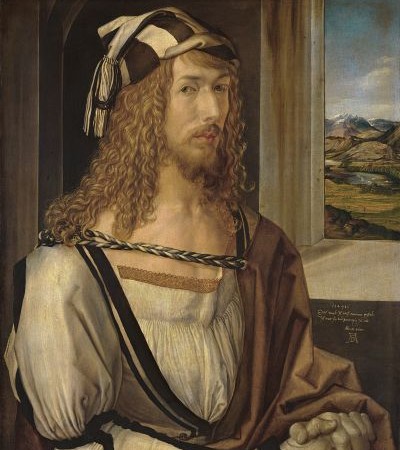
ALBRECHT DURER: Life, Ego and Afterlife.
Presented by Albert Godetzky
Venue: Glen Eira Town Hall
Morning lecture: 10 a.m. Afternoon lecture: 1.30 p.m.
In his day, Albrecht Dürer was a larger-than-life figure. Through the high quality of his woodcutting, and the facility with which printed culture could be disseminated, Dürer became an international success. Not a stranger to a mode of self-fashioning that would sit comfortably in today’s social media channels, Dürer crafted a lasting legacy for his art through his prints, paintings, and copious writing. This lecture traces the artist’s origins in his goldsmith father’s workshop in Nuremberg, his ambitious travels in Italy and subsequent patronage by the Habsburgs
Albert Godetzky received his PhD on Haarlem Mannerism from the Courtauld Institute where he was Associate Lecturer in Early Modern Art until 2025. He has worked at several European institutions including the National Gallery, London, as the Harry M. Weinrebe Curatorial Fellow. He is currently a lead researcher for a private collection in the Netherlands and is preparing a book length biography of the Dutch artist Hendrick Goltzius for Reaktion Press.
Image: Albrecht Durer – Self Portrait
Thursday 26 March 2026
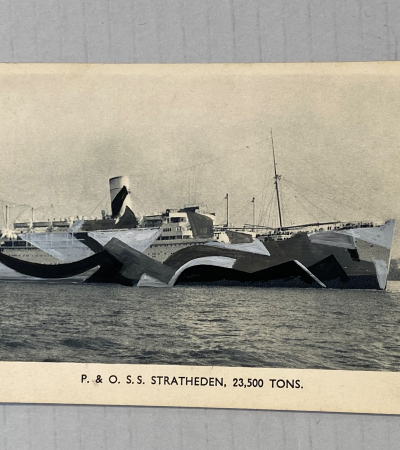
UNDERCOVER: Australia’s Camouflage Artists of World War Two
Presented by Zana Dare
Venue: Glen Eira Town Hall
Morning lecture: 10 a.m. Afternoon lecture: 1.30 p.m.
In this lecture we will discover the secret camouflage artists who helped protect Darwin and Northern Australia when under the threat of invasion. Artistic innovation provided low technology solutions. This is a story of crisscrossing boundaries between art and design, military science, biology and nature.
With an Honours degree in majoring in Australian history and a Graduate Diploma in Museum Studies from the University of Sydney, Zana worked in Australian museums in a variety of roles. Since retiring, Zana continues to share her passion for art, history and culture as an Enrichment Speaker, sailing with Regent Seven Seas, Viking, Cunard and Royal Caribbean Cruises. In 2016 Zana co-authored a book, ‘The Creative Pulse – 5 Steps to Stretch Your Imagination’.
Image: P&O S.S. Stratheden
Thursday 7 May 2026
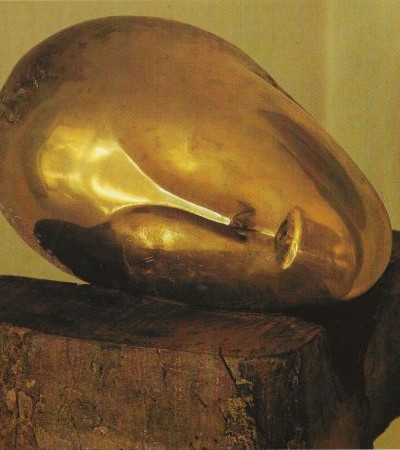
CONSTANTIN BRANCUSI AND 20TH CENTURY SCULPTURE
Presented by David Worthington
Venue: Glen Eira Town Hall
Morning lecture: 10 a.m. Afternoon lecture: 1.30 p.m.
Brancusi was the son of a peasant from a mountainous province of Romania yet he became an internationally famous artist and is now seen as one of, if not the most, important sculptors of the 20th century. Brancusi combined the Romanian wood working tradition with a Belles Arts fine art training. He also had an intuitive understanding of the significance of engineered products. Brancusi is an enigmatic contradiction, and this will be explored in this lecture, along with his relevance to 20th century sculpture.
David Worthington has been drawn to abstract sculpture since seeing a work by Barbara Hepworth in a school history book aged 10. He graduated from Oxford University in 1984 with a degree in Philosophy and Theology, then studied Fine Art in London, Barcelona and New York. David is a Fellow of The Royal Society of Sculptors and was Vice President in 2010-13. He has carried out public commissions in the UK, America and Japan.
Image: Brancusi Sleeping Muse 7
Thursday 4 June 2026
THE ART OF MAPS: ANCIENT MEDIEVAL AND MODERN
Presented by John Williamson
Venue: Glen Eira Town Hall
Morning lecture: 10 a.m. Afternoon lecture: 1.30 p.m.
This lecture discusses the development of maps of the world and the gradual improvement of maps for shipping, maps of the world, the addition of longitude and latitude, what maps show and what they leave out. Most of all it shows how beautiful they were and the skill of the cartographers who created them.
John is currently the Coordinator of Humanities and Senior Teacher, Fahan School. Until 2019 John was also Associate Lecturer Bachelor of Antarctic Studies Programme, IASOS, at the University of Tasmania. He has operated as a Historian / Guide for the Quark Expeditions, “The Wonders of the Ross Sea” Antarctic Voyage and Researcher and Tour Guide for “Hobart’s Waterways Tours”, Hobart City Council. John has also been an Antarctic History Researcher, ‘Antarctic Tasmania’, Department of Premier and Cabinet, Tasmanian Government. John has written numerous published articles on his areas of interest.
Image: Abraham Ortelius – World Map

SPECIAL INTEREST EVENT
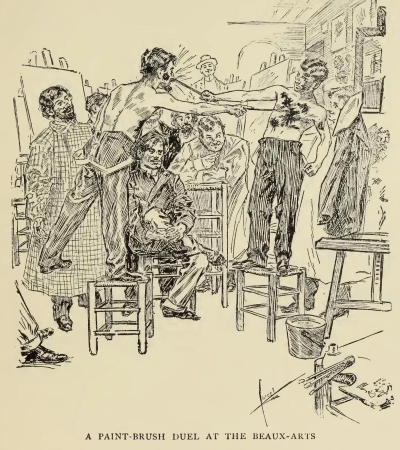
PAINTBRUSHES AT DAWN: The World’s Greatest Artistic Feuds, Rows and Quarrels
Wednesday 1st July 2026
Presented by Barry Venning
Venue: Glen Eira Town Hall
Time: 1.30 pm – 4.00 pm
The history of art is peppered with first rate bust ups: between the great early Renaissance artists Brunelleschi and Ghiberti, between Constable and Turner in the early 1830s, between Salvador Dali and the Surrealist leader, Andre Breton in the 1930s and, most recently, between the graffiti artists Banksy and ‘King’ Robbo, who painted out and amended each other’s works. There are many more. They are highly entertaining, but they also tell us a great deal about key issues in art history.
Barry Venning is an art historian whose interests and teaching range from the art of late medieval Europe to global contemporary art. He has published books, articles and exhibition catalogue essays on Turner, Constable and European landscape painting, but also has an ongoing research interest in postcolonial art and British visual satire. He works as a consultant and associate lecturer for the Open University. His media work includes two BBC TV documentaries, radio appearances for BBC local radio and ABC Australia, and a DVD on Turner for the Tate.
Image: Edouard Alfred Cucuel: Bohemian Paris: A paint-brush duel at the Beaux-Arts
Thursday 2 July 2026
SPECTACULAR BODIES: Art, Anatomy, Medical Science
Presented by Barry Venning
Venue: Glen Eira Town Hall
Morning lecture: 10 a.m. Afternoon lecture: 1.30 p.m.
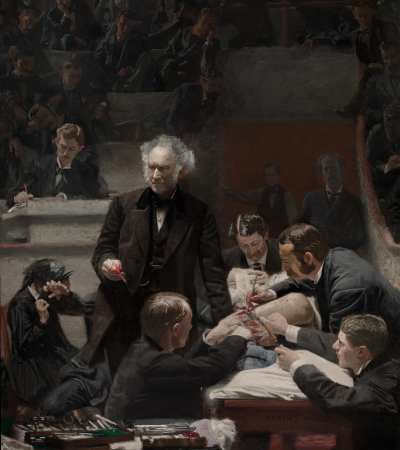
Without the help of some supremely talented artists, sculptors, draughtsmen and engravers, the practice of medicine would not have advanced as rapidly as it did. This lecture examines the mutual benefits that art and medical science have bestowed upon one another. It refers to the art of great Renaissance masters such as Leonardo, Antonio Pollaiuolo and Michelangelo, but it also considers examples of work by (among others) Rembrandt, Hogarth, the American realist painter Thomas Eakins and the English artist Henry Tonks, who was both a distinguished surgeon and a gifted painter and teacher.
Barry Venning is an art historian whose interests and teaching range from the art of late medieval Europe to global contemporary art. He has published on Turner, Constable and European landscape painting, but also has an ongoing research interest in postcolonial art and British visual satire. His media work includes two BBC TV documentaries, radio appearances for BBC local radio and ABC Australia, and a DVD on Turner for the Tate.
Image: Thomas Eakins – The Clinic of Dr. Gross
Thursday 30 July 2026
PERSEPOLIS: Art, Architecture and Ideology of the Persian Empire
Presented by James Renshaw
Venue: Glen Eira Town Hall
Morning lecture: 10 a.m. Afternoon lecture: 1.30 p.m.
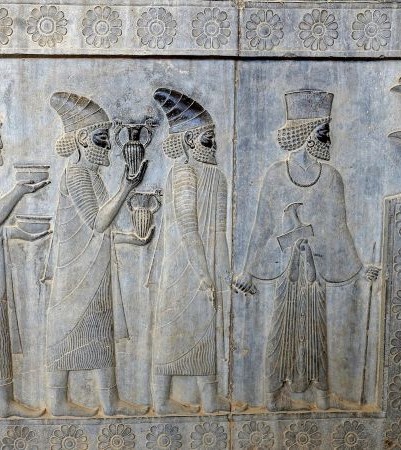
The Persian empire exploded into life during the middle of the 6th century BC and was the largest empire in the world for the next two centuries. In around 515, its third Great King, Darius I, commissioned the building of a new city, Persepolis, with his palace at its centre. We know a great deal about this palace, and one of its central features, the Apadana Staircase, can be seen in replica in the British Museum. What can this palace and its art tell us about the ideology of this extraordinary, influential empire?
Following a degree in Classics from Oxford University, James has taught Classics at secondary school level since 1998, including early in his career at Sydney Grammar School. He currently teaches at Godolphin and Latymer in London; here he runs the school’s Ancient World Breakfast Club, which has an ethos similar to that of The Arts Society. Since 1998, James has published a number of textbooks related to the classical world, including In Search of the Greeks and In Search of the Romans. James has also lectured for the V&A Academy, most recently on their Classical World and its Afterlife and Classicism from the Ancients to the Renaissance courses. James is a keen traveller and photographer of ancient sites
Image: Persepolis – Stairs of the Apadana Relief
Thursday 3 September 2026
THE USE OF NATURALISM IN THE WORK OF FABERGÉ
Presented by Claire Blatherwick
Venue: Glen Eira Town Hall
Morning lecture: 10 a.m. Afternoon lecture: 1.30 p.m.
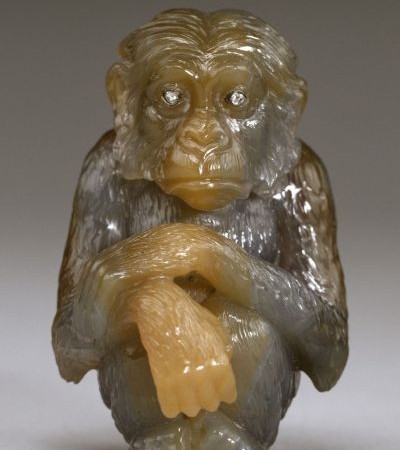
The name Fabergé resonates with many of us and conjures up images of pre-revolutionary Russia, the most opulent Easter eggs ever produced and exquisite pieces found in the most important collections in the world. This lecture discusses the use of naturalism in the work of Fabergé, focusing on the firm’s lesser-known experiments in Art Nouveau as well as animal representations in hardstone carvings, the flower studies that the firm excelled in and the naturalistic imagery incorporated into objets d’art such as desk seals and caviar dishes.
Clare Blatherwick is an independent jewellery consultant and historian based in Scotland, with over twenty years of experience in the jewellery business. As Head of Jewellery for Bonhams in Scotland, Clare has travelled extensively, searching for jewels to auction worldwide. She has lectured internationally, appearing on TV programs in the UK and US and is a member of The Society of Jewellery Historians
Image: Persepolis – Fabergé Chimpanzee
Thursday 17 September 2026
EXCURSION: TarraWarra Museum of Art
Time: 8.00a.m. – 4.30p.m.
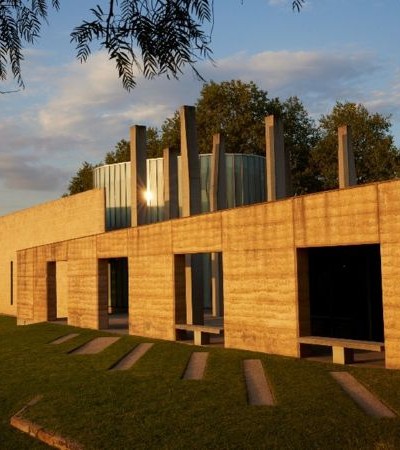
Our visit to TarraWarra Museum of Art will include an introductory talk about the newly opened Besen Visible Art House and a visit to the current exhibition in the main gallery titled Inside the Mirage, a group exhibition including paintings by Ian Fairweather and John Young Zerunge This will be followed by a two course lunch with a glass of wine at the iconic TarraWarra restaurant where award winning Chef Maxwell Parlas creates menus seasonally from Tarrawarra’s kitchen garden.
Image: TarraWarra Museum of Art
SPECIAL INTEREST EVENT
EAST MEETS WEST: the Influence of Chinese and Japanese Art on European Decoration
Wednesday 7 October 2026
Presented by Amanda Herries
Venue: Glen Eira Town Hall
Time: 1.30 pm – 4.00 pm
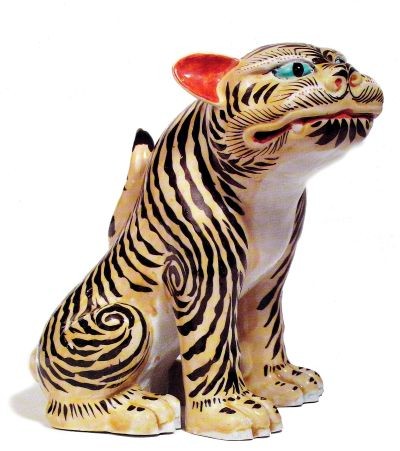
This talk charts the beginnings and flowering of the never-ending fascination for Oriental designs and decoration. By the 18th century Chinoiserie was a craze and everyone – not just the very rich – wanted some of the style. European ceramics factories raced to copy and develop materials and patterns. Japan was forced to open its harbours to international trade in the 1850s and the resultant interest in anything Japanese led to innovation and influence in a wide range of creative arts, from painting to furniture to gardens and more.
Amanda Herries read Archaeology & Anthropology at Cambridge. 1978-1988 she was Curator at Museum of London specialising in the decorative arts 1714 to present day, exhibitions, lectures, booklets, broadcasts. 1988-1995 Amanda moved with family to Japan, lecturing and writing on Oriental / Western cross-cultural and artistic influences. 1995 she returned to UK, fundraising for arts companies, writing, lecturing and guiding tours to Japan and curating exhibitions. Most recent publications on Japanese plant and garden influences in the West and the life of Henry Raeburn, Scotland’s foremost portrait painter.
Image: Kakiemon (Japanese) Model of a Tiger. Late 17th century
Thursday 8 October 2026
OPIUM: Seduction, Greed, Art
Presented by Amanda Herries
Venue: Glen Eira Town Hall
Morning lecture: 10 a.m. Afternoon lecture: 1.30 p.m.
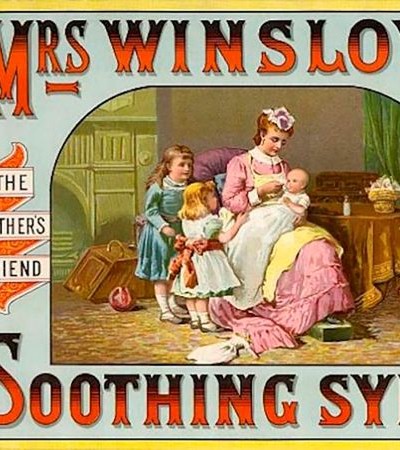
The source of the stuff of dreams, the poppy is a beautiful, fragile flower with immense power. Opium is a hypnotic bringer of sleep, delightful lethargy and relief from pain. It is also highly addictive. Greed led to the introduction of this hugely desirable substance, first to China, and then to Europe. The beguiling seduction of its effects led to its use to quieten troubled minds and calm agitated children and babies. Its use – often by those with troubled minds – led to the creation of great works of art in music, art and literature.
Amanda Herries read Archaeology & Anthropology at Cambridge. 1978-1988 she was Curator at Museum of London specialising in the decorative arts 1714 to present day, exhibitions, lectures, booklets, broadcasts. 1988-1995 Amanda moved with family to Japan, lecturing and writing on Oriental / Western cross-cultural and artistic influences. 1995 she returned to UK, fundraising for arts companies, writing, lecturing and guiding tours to Japan and curating exhibitions. Most recent publications on Japanese plant and garden influences in the West and the life of Henry Raeburn, Scotland’s foremost portrait painter.
Image: Persepolis – Mrs. Wilmslow’s Soothing Syrup. c.1850s
Thursday 5 November 2026
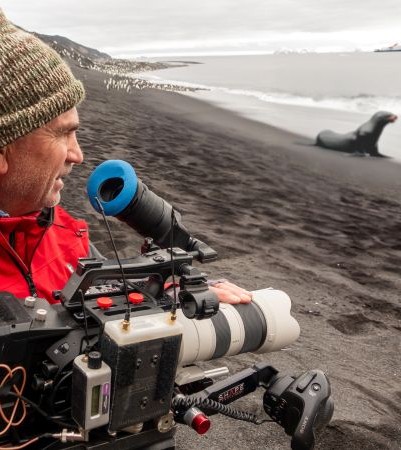
ON THE WILD SIDE: Filming Creatures Great and Small
Presented by Pieter de Vries
Venue: Glen Eira Town Hall
Morning lecture: 10 a.m. Afternoon lecture: 1.30 p.m.
In this lecture, Pieter will share stories and techniques for capturing extraordinary images for David Attenborough and National Geographic. From playful Macaque monkeys in China to majestic Cassowaries in Northern Australia, He’ll illustrate his presentation with segments from his nature documentaries.
Pieter’s career has seen him filming the Red Army in China, rats in the sewers of New York, and the wreck of the Titanic. Pieter was Director of Photography for Darwin’s Lost Paradise.
Image: Persepolis – Pieter De Vries filming in Antarctica