Canberra
ArtsNational Canberra welcomes you. 
ArtsNational Canberra offers a yearly program of one hour illustrated lectures by overseas and Australian lecturers, chosen for their communication skills and expert knowledge. Occasional half-day sessions (Special Interest Mornings) offering additional lectures, are also held for a separate fee.
Regular newsletters provide information on lectures, speakers and other activities.
Lectures:
Venue:
Lectures are held at the National Library of Australia, Parkes Place, Canberra.
Free parking is available in the National Library carpark after 5.30pm.
Time:
Lectures will be held on Tuesday evenings
Lectures start at 6.00 pm. They last an hour and refreshments are served afterwards.
Program
Find full details of the 2026 program here
Double membership: $460
Guest fee: $40 per lecture
Admission is by name badge.
Click here to join or email: adfasmembershipcanberra@gmail.com
Please note: Special Interest Mornings and other events attract a separate charge.
Guests welcome:
Guests and visitors are most welcome, at a charge of $40 per lecture.
We ask guests to book for lectures in advance using Trybooking at the link below the lecture description or contact our Membership Secretary at adfasmembershipcanberra@gmail.com
Committee
Chair: Sue Healy
Vice Chair: Margaret May
Secretary: Janet Lynch
Public Officer: Penny Campbell
Treasurer: Myra Croke Ph: 0419 433 170
Membership Secretary: Liz Quinn Ph: 0422 545 885
Contact:
For all enquiries please email: adfasmembershipcanberra@gmail.com
Postal Address: PO Box 9510, Deakin, ACT 2600
ABN: 65 303 903 455
2026 PROGRAM
Tuesday 10 February 2026
CONSERVATION OF THE AUSTRALIAN COPY OF THE MAGNA CARTA
Presented by Libby Melzer
Venue & Time: National Library of Australia, 6pm.
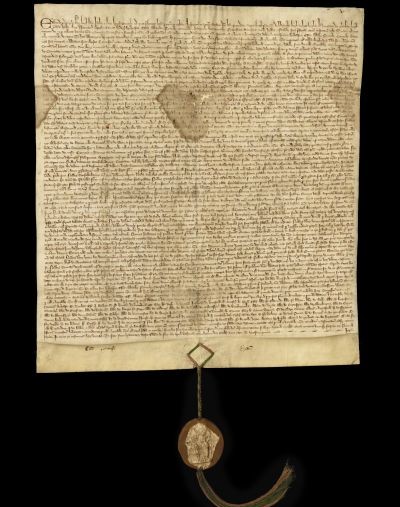
This presentation will discuss the highlights and complexities of the nearly 10-year project to analyse and conserve the 1297 inspeximus issue of the Magna Carta in the collection of the Parliament of Australia. It will explore the Magna Carta’s journey to Australia during Robert Menzies’ government, the innovative production of the 1961 anoxic display case by the CSIRO, and its removal from this case in 2016.
Libby will outline the new insights into the Magna Carta that analysis of the materials has provided and discuss the science behind its display in the Members’ Hall of Parliament House.
Libby Melzer is the Head of Collection Care at the State Library of Victoria. She has over twenty-five years’ experience in the conservation of heritage material and in leading conservation teams delivering complex muti-disciplinary projects. In her former role as head of paper conservation at the University of Melbourne she was a conservation lead on the complex project to conserve the 1297 edition of the Magna Carta in the collection of the Parliament of Australia
Image: The 1297 inspeximus issue of the Magna Carta owned by the Australian nation. Courtesy of the Australian Department of Parliamentary Services.
Tuesday 10 March 2026
IMPERIAL PURPLE TO MARIE ANTOINETTE’S FLEAS: THE COLOURFUL HISTORY OF TEXTILES
Presented by Susan Kay-Williams
Venue & Time: National Library of Australia, 6pm.
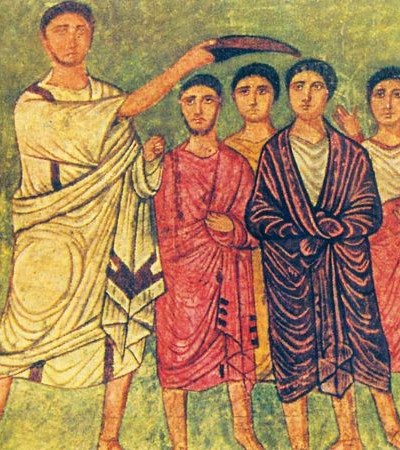
In this lecture, Susan explores the fascinating story of how dyes were discovered, made, and used from the earliest times to the end of the 18th century. Susan will look at the social importance of certain colours including red, blue, and purple. The use of colour in textiles is a story that travels from Europe to India and the Americas; a tale of exploration, invention, war, the church, money, power and sex!
Susan Kay-Williams was the chief executive of the Royal School of Needlework for seventeen years until late 2024. She is a Fellow of the Royal Society of Arts and the President of the Society of Dyers and Colourists. Susan has a longstanding interest in textiles, and published her first book, The Story of Colour in Textiles, in 2013. In 2022 Susan published An Unbroken Thread: The 150-year History of the Royal School of Needlework.
Image: Dura Europos Synagogue, panel WC3: David Anointed King by Samuel (CE 3rd Century). Ancient use of purple dye. Source: Wikimedia Commons.
Tuesday 19 May 2026
JOURNEY ACROSS THE HIMALAYAS
Presented by Zara Fleming
Venue & Time: National Library of Australia, 6pm.
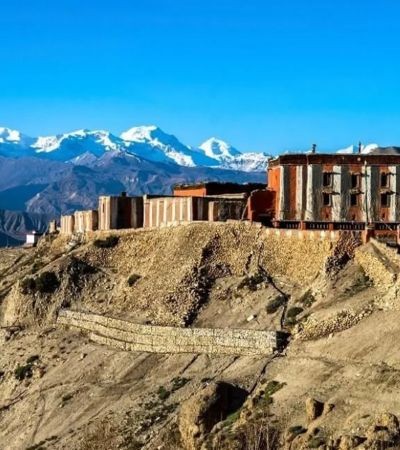
This lecture will focus on the Buddhist areas of the highest mountain range in the world, the Himalayas — the once spiritual domain of Tibetan culture and religion, spanning 2,000 miles from Ladakh in the west to Bhutan in the east. Zara will explore the kingdoms and principalities of Ladakh, Zanskar, Spiti, Lahoul, Nepal, Mustang, Sikkim, Bhutan and their spiritual heartland of Tibet.
Many of these countries lay on the ancient trade routes connecting India with Central Asia, and although isolated became important centres of Buddhist art and culture, housing vast repositories of sacred in art in their monasteries and temples
Zara is a freelance lecturer, art consultant and curator, specialising in the art and culture of Tibet, the Himalayas and Mongolia. Initially based at the V&A, Zara has also worked with the Central Asian Department of Bonn University, the Orient Foundation, the Royal Academy and many museums and galleries. Zara edited volume 1 of Masterpieces of Mongolian Art and published articles on Buddhist art and culture. Zara has been a tour guide on numerous trips to the Himalayas.
Image: Monastery of Tsarang, Mustang. Source: Image from lecturer.
SPECIAL INTEREST MORNING
Wednesday 20 May 2026
BUDDHISM
Presented by Zara Fleming
Venue & Time: 10.00am, 25 Forster Crescent, Yarralumla
Cost: $65 members, $70 non-members
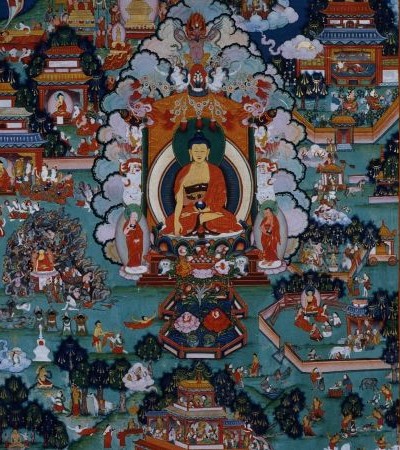
This Special Interest Morning focuses on how to appreciate the Mahayana and Vajrayana Buddhist art of the Himalayas and Tibet.
Lecture 1: Buddhism
Thiis lecture will cover the transmission of Buddhist art and architecture from its birthplace in India into the Himalayas and provide a general overview of Buddhism.
Lecture 2: The Sacred Art of Tibet
In this lecture, Zara will explore the rich symbolism of Tibetan art and explain how to interpret the common images, themes and motifs seen therein.
Image:Painting of the Life of the Buddha, Tibet. Image from lecturer.
Tuesday 16 June 2026
THE ART WORK AND HANDWRITTEN JOURNALS OF THE FIRST FLEETERS
Presented by Paul Brunton
Venue & Time: National Library of Australia, 6pm.
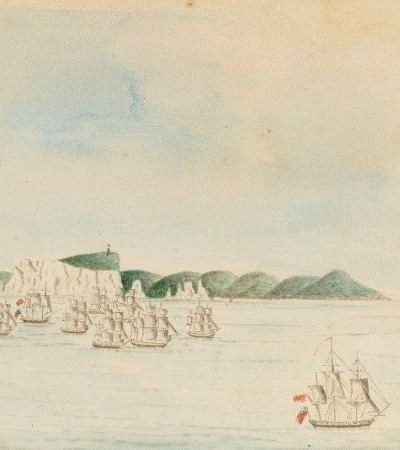
Of the approximately 1,400 people on the First Fleet of 1787–88, the handwritten journals of only 11 have survived. These provide eyewitness accounts of the voyage to Sydney and the first years here. They record the interaction with the Aboriginal people. Written by men of different ranks, each journal offers a unique perspective. Most were discovered only in the 20th century, and one was only acquired by the State Library of NSW as late as 1995. In 2009, the collection held in the Mitchell Library was included in the UNESCO Memory of the World Program.
Paul Brunton was Senior Curator, Mitchell Library at the State Library of New South Wales until November 2012. He worked with the Mitchell Library’s Australiana collections from 1973 and was Curator of Manuscripts from 1986 to 2001. Paul has published annotated editions of Joseph Banks’ journal from the Endeavour (1768–1771), and of Matthew Flinders’ letters. Paul is currently preparing an annotated edition of William Bligh’s handwritten journal and logbook from HMS Bounty (1787–1789) for publication
Image: William Bradley, drawings from his journal ‘A Voyage to New South Wales’ (c. 1802). Source: Mitchell Library, State Library of NSW. Out of copyright.
Tuesday 14 July 2026
FLORENCE AND THE BIRTH OF THE ITALIAN RENAISSANCE
Presented by Charlie Hall
Venue & Time: National Library of Australia, 6pm.
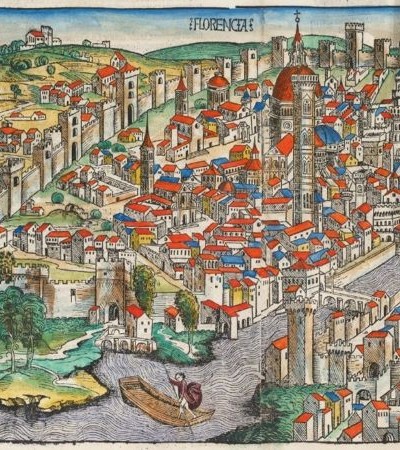
We are all so familiar with the ideas and culture of the Italian Renaissance, a phenomenon that emerged in the 15th century. But why did Florence act as the midwife for this evolution? What did the city provide that enabled this birth and encouraged it to flourish? Is it something that was so efficiently reported and propagandised by people such as Giorgio Vasari, the 16th century artist and art historian, that we accept that Florence was indeed where the Italian Renaissance emerged?
A passionate arts educator, lecturer and guide, Charlie Hall is based in London and Italy. He is the director of the highly regarded John Hall Venice Course and tour lecturer and leader for Kirker Holidays since 2013. He also leads independent tours in Italy. Charlie designs and hosts art talks and events for the Soho House group of private members’ clubs. He also designed and led courses for Christie’s education and the Serpentine Gallery ‘Collector’s Circle’
Image: Florence, 1493 woodcut from the Nuremberg Chronicle by Hartmann Schedel. Public domain image.
SPECIAL INTEREST MORNING
Wednesday 15 July 2026
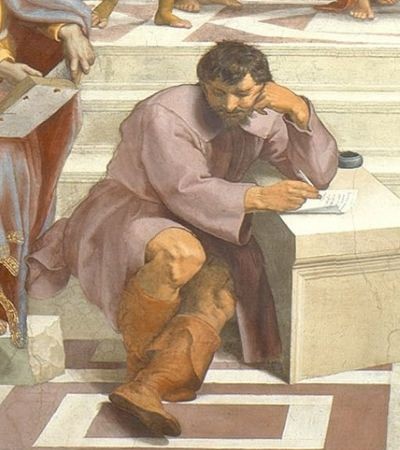
RENAISSANCE RIVALS: HOW COMPETITION BETWEEN LEONARDO, MICHELANGELO AND RAPHAEL PROVIDED THE FUEL THAT DROVE THE ITALIAN RENAISSANCE
Presented by Charlie Hall
Venue & Time: 10.00am, 25 Forster Crescent, Yarralumla
Cost: $65 members, $70 non-members
This special interest morning will look at three giants of the Italian Renaissance who were involved in fierce competition with each other: Leonardo, the master, Michelangelo, the brooding upstart genius, and Raphael, the artist who carefully crafted a stellar career in the shadows, to emerge as a bright light that was tragically extinguished by an early death just as he began to be recognised in his own right.
‘Everything that Raphael had, he took from me’, is what Michelangelo remarked as Pope Julius II pitted them against each other in the Vatican.
Image: Raphael, School of Athens, detail showing a portrait of Michelangelo as Heraclitus (1500s).
Fresco in the Vatican. Source: Wikimedia Commons.
Tuesday 18 August 2026
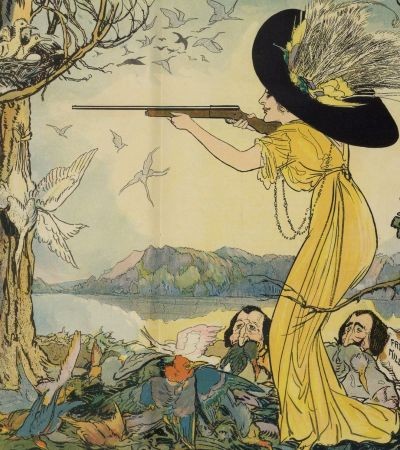
FASHION, FEATHERS AND FEMINISM: WOMEN’S FIGHT FOR CHANGE
Presented by Tessa Boase
Venue & Time: National Library of Australia, 6pm.
When Tessa told the Royal Society for the Protection of Birds she wanted to write their early story, they refused to let her visit their archives — a challenge Tessa could not resist. In this lecture Tessa looks at the intriguing story of women’s love affair with plumage, and of the brave eco-feminists who fought back on behalf of the birds. Moving from a polite Victorian tea party to an egret hunt in a Florida swamp; from a suffragette ‘monster rally’ to a milliner’s workshop, Tessa takes you back to a time where every woman, of every class, wore a hat.
Tessa is a freelance journalist, social historian and campaigner with an interest in uncovering the stories of invisible women from the 19th and early 20th centuries, revealing how they drove industry, propped up society and influenced politics. Tessa has written three books of social history, one of which is about the feminist origins of the Royal Society for the Protection of Birds and has since campaigned for public recognition of its female founders.
Image: The Woman Behind the Gun (1911). Image from lecturer.
Tuesday 15 September 2026
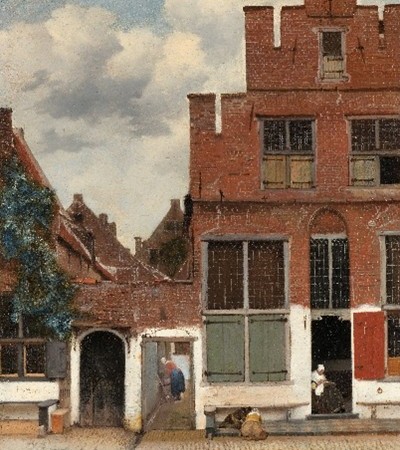
THE DUTCH GOLDEN AGE IN SIX PAINTINGS
Presented by Mariska Beekenkamp-Wladimiroff
Venue & Time: National Library of Australia, 6pm.
The 17th century in the Netherlands, referred to as the Dutch Golden Age, was the time of Rembrandt and Vermeer, of extraordinary riches and incredible progress. There may be no other country in which in the brief span of a hundred years so many paintings were executed. It would be hard to find a museum in the world not housing at least one painting from the Dutch Golden Age. This talk will use six paintings to introduce how the arts flourished in the tiny republic during this period, and to introduce the Dutch, their cities, landscapes, society, beliefs and artistic genres
Mariska read Social Psychology at the University of Amsterdam but turned to her true love — the Arts. She completed her BA and MA in art history, majoring in the Dutch Baroque arts from the 17th century, at the Courtauld Institute of Arts. Mariska started as a college lecturer but then started her own company, Art Historical London, offering art historical lectures, museum visits, courses, tours and events from Amsterdam, London and New York, and online
Image: Johannes Vermeer, The Little Street (c. 1660), Rijksmuseum. Image from the lecturer.
Tuesday 20 October 2026
THE ART OF STATE CEREMONIAL MUSIC
Presented by Graham Jones
Venue & Time: National Library of Australia, 6pm.
The UK provides some of the biggest ceremonial events in the world, and arguably the best in the world, but why is that? How does the military prepare for major events such as the State Opening of Parliament, State Visits, National Days of Remembrance, royal weddings or even a state funeral? Graham will provide an insight into the challenges of state ceremonial events in this lecture
Graham started his professional life as a musician in the British Army and after a 40-year career, he retired as the Senior Director of Music, Household Division and Director of Music, Coldstream Guards. Graham recorded over forty albums and commissioned over thirty new works for wind band. He also pioneered a music education program for military musicians at the University of Salford. Graham is enjoying his second career as a conductor, lecturer and educator.
Image: Trooping the Colour, The Mall, London. Image from the lecturer.